Water intrusion in a home often spreads quickly through porous materials such as drywall, wood, and insulation, and can begin migrating within minutes under active leakage or flooding conditions. Homes in Wixom, Michigan, face added pressure from seasonal freezes, heavy rain, and basement drainage issues. This makes water removal an immediate priority for property protection. My Dry Team Restoration Services supports homeowners with water damage restoration and flood restoration services designed to address both visible water and hidden moisture inside structures.
Water damage does not stay in one area for long. It moves through flooring, walls, and insulation, often before clear signs appear. Quick action helps limit structural weakening and supports safer living conditions after a leak, burst pipe, or flooding event.
Why Immediate Water Removal Matters
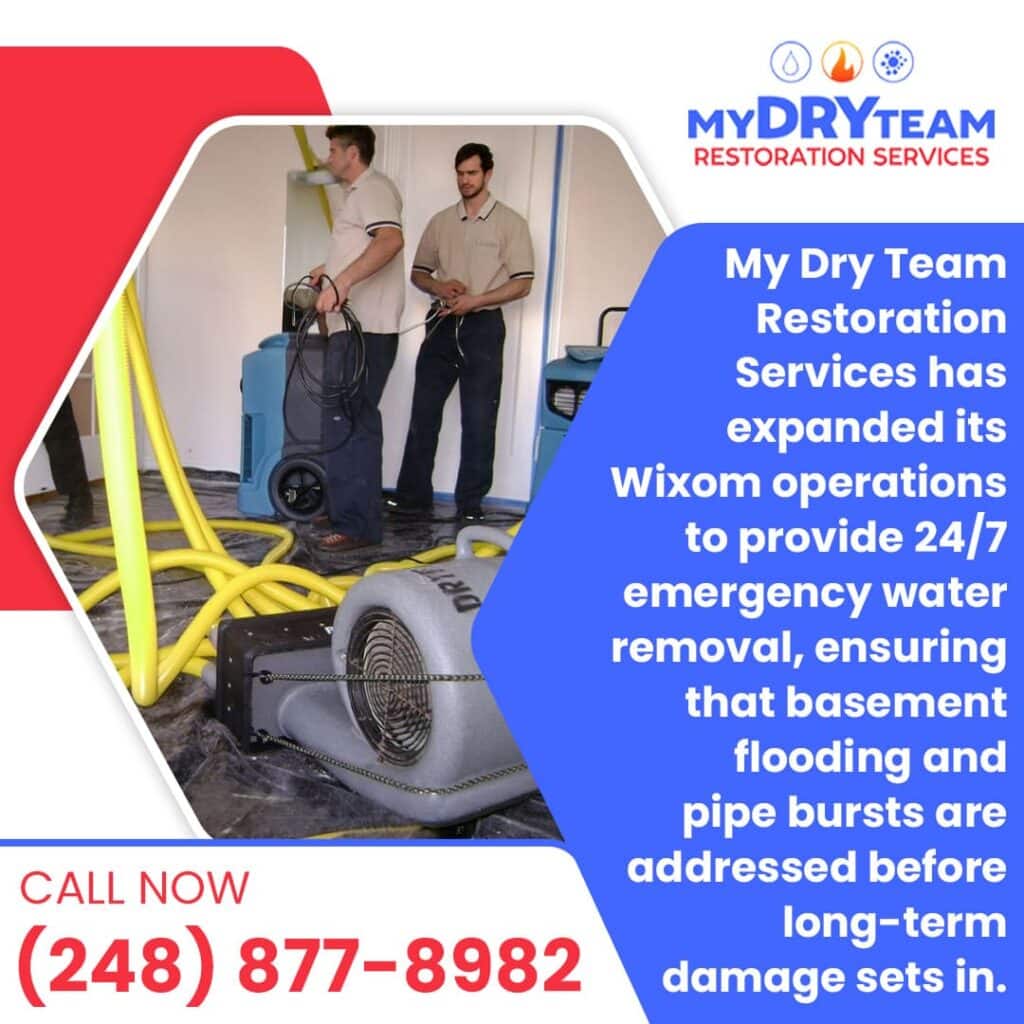
Immediate water extraction reduces the time moisture stays inside building materials. We focus on fast response because water can begin spreading through absorbent building materials shortly after exposure.
In water damage restoration, time affects how far water travels and how deeply it enters surfaces. Our team responds to limit this movement and reduce the repair scope.
How Water Damage Spreads Through a Property
Water moves through floors, walls, and hidden cavities. You may see water in one area while other spaces are already affected.
We often find moisture moving through:
- Wall cavities behind drywall
- Flooring seams and baseboards
- Insulation inside interior walls
- Basement framing and sill plates
Water follows gravity and airflow paths. This makes early water drying important for limiting spread across rooms.
Structural Problems Caused by Delayed Water Extraction
Delays in the removal of water allow moisture to spread deeper into building materials. This leads to structural weakening and more involved damage restoration work.
Drywall absorbs water quickly and loses strength, while insulation holds moisture against framing. This combination slows drying inside wall cavities.
Common signs include:
- Soft or sagging walls
- Reduced insulation performance
- Moisture trapped behind paint layers
These issues can begin developing within hours of prolonged moisture exposure and may progress beyond surface-level damage if water remains trapped inside wall assemblies.
Flooring also reacts fast to water exposure. Wood and laminate expand, while hidden moisture affects the subfloor.
Typical outcomes include:
- Warped or separating hardwood
- Buckled laminate flooring
- Soft subfloor areas under carpet or tile
When water reaches the subfloor, full drying becomes harder and may require partial removal.
Basements in Wixom homes face regular moisture exposure due to weather patterns. Water can enter through foundation walls, cracks, or drainage pressure, often leading to damp conditions and storage damage. The restoration services commonly begin in basements since water collects there first.
Mold Growth and Indoor Air Quality Concerns
Mold can begin developing in damp areas that remain wet for extended periods, often under warm and humid conditions. It often starts in hidden locations.
We typically detect mold in:
- Behind drywall panels
- Underflooring layers
- Around HVAC vents
Poor indoor air quality follows mold growth. This can spread spores across rooms if not treated during water extraction.
Why Michigan Weather Increases Flood and Water Damage Risks
Seasonal weather changes in Michigan raise water intrusion risks for homeowners.
We see common triggers such as:
- Frozen pipes that burst during winter
- Rapid snowmelt entering basements
- Heavy rain is causing a sump pump overload
- Ice buildup is blocking drainage paths
These conditions increase the need for fast restoration services. Water damage restoration becomes more complex when repeated exposure occurs across seasons.
Common Causes of Residential Water Damage in Wixom, MI
Water damage in Wixom homes usually comes from weather, plumbing, or drainage issues. These cases are handled through water clean-up and damage restoration services.
Burst Pipes During Freezing Temperatures
Cold weather causes pipes to freeze and burst inside walls or basements.
Common situations include:
- Pipe bursts in exterior walls
- Basement line failures near foundations
- Ceiling leaks from upper floors
Leaks often appear after frozen pipes thaw.
Heavy Rain and Basement Flooding
Heavy rain and snowmelt often lead to basement water entry.
Typical causes include:
- Foundation cracks
- Poor yard drainage
- Soil saturation pushes water inward
Basements and storage areas are usually affected first.
Sump Pump Failures
Sump pump failure can lead to rapid basement flooding during heavy rainfall or snowmelt events.
Common issues include:
- Power outages during storms
- Mechanical breakdown
- Overloaded systems
Water often collects quickly on basement floors.
Appliance and Plumbing Leaks
Leaks can develop slowly and remain hidden for long periods.
Frequent sources include:
- Washing machine hose leaks
- Water heater failures
- Sink or dishwasher line cracks
Hidden moisture is often found during inspections.
Roof Leaks and Storm Damage
Roof damage allows water to enter attics and spread downward.
Common signs include:
- Missing shingles
- Ice dams
- Ceiling stains
Damage often appears after storms.
Sewage Backups and Drainage Issues
Sewage backups create hazardous water conditions that need a fast response.
Common causes include:
- Blocked sewer lines
- Municipal overflow
- Drain system failure
These cases require both water drying and sanitation.
Emergency Water Removal: What Homeowners Should Do First
Emergency removal starts with quick actions that limit water spread and reduce property damage. These steps help prepare the home for water damage restoration with fewer complications.
Below are the actions to take right after water intrusion.
Shut Off the Water Source Immediately
Stopping the water source helps control further flooding.
Common shut-off points include:
- Main water valve in the basement
- Outdoor meter shut-off box
- Appliance-specific valves (washer, heater)
This step reduces ongoing water flow inside the home.
Turn Off Electricity in Affected Areas
Water near electricity creates unsafe conditions. Power should be turned off only if safely reachable.
Key actions include:
- Switching off breakers for affected rooms
- Avoiding wet areas near outlets
- Staying away from submerged appliances
This helps reduce risk during early cleanup.
Remove Furniture and Valuable Items
Moving items away from wet areas helps reduce damage.
Focus on:
- Furniture like sofas and tables
- Electronics and devices
- Documents and storage boxes
Place items in dry or elevated areas.
Document Damage for Insurance Claims
Photos and videos help record the condition of the property after water damage.
This includes:
- Water levels in rooms
- Damaged floors and walls
- Affected belongings
This supports insurance claim processing.
Contact a Professional Restoration Company
Professional help speeds up water drying using specialized equipment.
Typical services include:
- Emergency inspection
- Water extraction
- Structural drying
- Moisture tracking
Early contact helps limit water spread into hidden areas and supports faster recovery.
The Professional Water Removal Process
Professional removal follows a structured sequence that controls moisture, limits spread, and supports full recovery.
At My Dry Team Restoration Services, each stage of damage restoration and flood restoration services follows a clear field-based approach shaped by real property conditions. Below is the process from arrival through final repairs.
Emergency Inspection and Damage Assessment
A detailed inspection starts the process by identifying visible water damage and hidden moisture inside materials.
Areas inspected include:
- Floors, walls, and ceilings
- Basement and crawl spaces
- Structural framing and insulation zones
Thermal imaging and moisture meters help detect water not visible on the surface and guide the drying plan.
Advanced Water Extraction Services
Standing water is removed using high-capacity equipment to reduce absorption into building materials.
Common tools include:
- Truck-mounted extractors
- Portable water vacuums
- Submersible pumps
This step lowers saturation levels and slows further material damage.
Industrial Drying and Dehumidification
After extraction, moisture often remains inside walls, floors, and framing.
Drying setup includes:
- Air movers are placed in affected areas
- Commercial dehumidifiers
- Directed airflow into cavities and flooring layers
Drying continues until moisture readings return closer to normal levels.
Sanitization and Odor Removal
Water intrusion can leave bacteria and odors behind, especially after contaminated water exposure.
Treatment includes:
- Cleaning affected surfaces
- Odor control applications
- Air filtration in enclosed spaces
This supports cleaner indoor conditions after flood restoration services.
Moisture Monitoring to Prevent Mold Growth
Moisture levels are tracked throughout the drying process to confirm hidden areas are drying properly.
Monitoring includes:
- Wall cavities
- Subfloor layers
- Basement framing
This helps reduce mold risk in concealed spaces.
Final Restoration and Repairs
After drying, damaged areas are repaired as part of the full water damage restoration work.
Typical repairs include:
- Drywall repair or replacement
- Flooring restoration or installation
- Trim and finishing work
At My Dry Team Restoration Services, restoration work is based on the actual condition of the property after water drying rather than following a fixed process.
How Water Damage Restoration Prevents Structural Damage
The restoration process focuses on stopping moisture from weakening building materials. Early removal limits deeper structural issues and reduces long-term deterioration inside a home.
Each stage targets materials that react quickly to water exposure.
Preventing Wood Rot and Structural Weakening
Wood framing absorbs moisture and loses strength over time, affecting the home’s support system.
Common issues include:
- Softened framing members
- Warping in structural wood
- Weakened joints and connections
Protecting Walls, Ceilings, and Flooring
Moisture often stays trapped behind finished surfaces and spreads over time.
Common signs include:
- Swollen drywall
- Bubbling paint or peeling finishes
- Warped wood or laminate flooring
Drying these areas early helps limit further surface and hidden damage.
Preventing Mold and Bacterial Growth
Damp areas create conditions where mold and bacteria can develop behind walls and under flooring.
Common locations include:
- Basement walls
- Carpet padding
- Wall cavities near plumbing
Proper drying and sanitization during water extraction help reduce this risk.
Reducing Long-Term Repair Costs
Delayed restoration often increases repair scope and expense.
Common cost drivers include:
- Full floor replacement instead of repairs
- Wall reconstruction instead of surface drying
- Electrical and insulation replacement
Early damage restoration helps limit the extent of rebuilding work.
Restoring a Safe Living Environment
Water intrusion affects indoor conditions beyond visible damage.
Restoration work focuses on:
- Removing trapped moisture
- Treating affected surfaces
- Restoring dry, usable living spaces
These services help bring affected areas back to stable conditions after water exposure.
Warning Signs of Serious Water Damage in Your Home
Water damage often shows early warning signs before it turns into structural issues. Common indicators include warped flooring, soft drywall, and gaps forming between floorboards, which point to trapped moisture under surfaces. Ceiling or wall stains, bubbling paint, and patchy discoloration often signal ongoing water movement inside building layers. Musty odors usually develop in hidden areas such as behind walls, under carpets, or in basement corners where mold may begin forming.
Sagging ceilings, wall cracks, and separation at joints can indicate that moisture has reached structural components. In Wixom homes, persistent basement dampness, wet walls, or standing water after rain often reflects drainage or foundation-related intrusion. These signs typically require prompt removal and restoration to limit further spread and material deterioration.
Why DIY Water Cleanup Can Be Risky
DIY cleanup often removes visible water but leaves moisture trapped inside walls, floors, and insulation. Water damage restoration requires tools that reach below the surface level.
Hidden Moisture Problems
Water can stay inside areas not visible during cleanup.
Common areas include:
- Behind drywall
- Under flooring
- Inside insulation
Leftover moisture continues to affect building materials over time.
Mold Growth Risks
Mold can develop soon after moisture exposure in hidden spaces.
Common areas include:
- Basement wall cavities
- Carpet padding
- Ceiling voids
It can spread through the air during flood restoration services.
Limited Drying Equipment
Household tools do not remove deep moisture inside structures.
Limits include:
- Surface-only drying
- No humidity control
- No moisture tracking
Materials often stay damp longer.
Insurance and Safety Concerns
DIY cleanup may affect claims and increase safety risks.
Common issues include:
- Electrical hazards
- Slippery floors
- Contaminated water exposure
Professional water removal reduces these risks and supports proper documentation.
Choosing the Right Flood Restoration Services in Wixom
Choosing flood restoration services affects how quickly a home recovers after water damage. We focus on clear standards that help separate qualified providers from limited-service teams.
Below are key factors homeowners can use when selecting support.
Look for IICRC-Certified Professionals
IICRC certification reflects training in damage restoration and drying methods.
Homeowners should expect:
- Training in moisture control
- Knowledge of structural drying
- Safe handling of contaminated water
Certified teams follow structured water cleanup procedures.
Importance of 24/7 Emergency Response
Water damage can happen at any time. Slow response increases moisture absorption.
Key points include:
- 24/7 availability
- Fast arrival after calls
- Immediate extraction setup
Quick response helps limit further spread inside the home.
Experience with Southeast Michigan Weather Damage
Wixom homes face repeated seasonal water risks.
Common issues include:
- Frozen pipe bursts
- Basement flooding
- Ice dam roof leaks
Local experience helps guide accurate restoration steps.
Insurance Claims Assistance
The restoration process often involves insurance paperwork.
Typical support includes:
- Damage photos
- Moisture reports
- Communication with adjusters
This helps keep claim documentation organized.
Full-Service Restoration and Reconstruction Capabilities
Some restoration cases need both cleanup and rebuilding.
Services may include:
- Drying and sanitization
- Drywall and flooring repair
- Basement reconstruction
This reduces the need for multiple contractors during recovery.
My Dry Team Restoration Services provides all of these capabilities, covering certified water damage restoration, emergency response, insurance support, and full restoration work for homeowners.
Frequently Asked Questions
Homeowners often have urgent questions after water damage. Clear answers help guide actions during water and flood restoration services.
Below are common questions from Wixom property owners.
Q1: How quickly should emergency water removal begin after flooding in a Wixom home?
Removal of water should begin within the first few hours after flooding.
Water spreads into flooring, drywall, and insulation quickly. Early response limits absorption and reduces hidden moisture inside structures. Delays often lead to deeper drying needs and higher restoration work.
Q2: What are the signs that water damage has affected a home’s structure?
Structural water damage shows through visible surface changes and hidden moisture.
Common signs include:
- Warped or uneven flooring
- Soft drywall surfaces
- Ceiling or wall stains
- Musty indoor odors
- Cracks or sagging areas
These signs often indicate moisture inside building materials that need inspection and drying.
Q3: Does homeowners’ insurance cover water damage restoration and flood cleanup services?
Coverage depends on the cause of water and the insurance policy.
Common coverage cases include:
- Sudden pipe bursts or appliance failures
- Certain storm-related water damage
- Limited flood coverage based on policy type
Insurance providers often request photos, moisture readings, and repair estimates during claims processing.
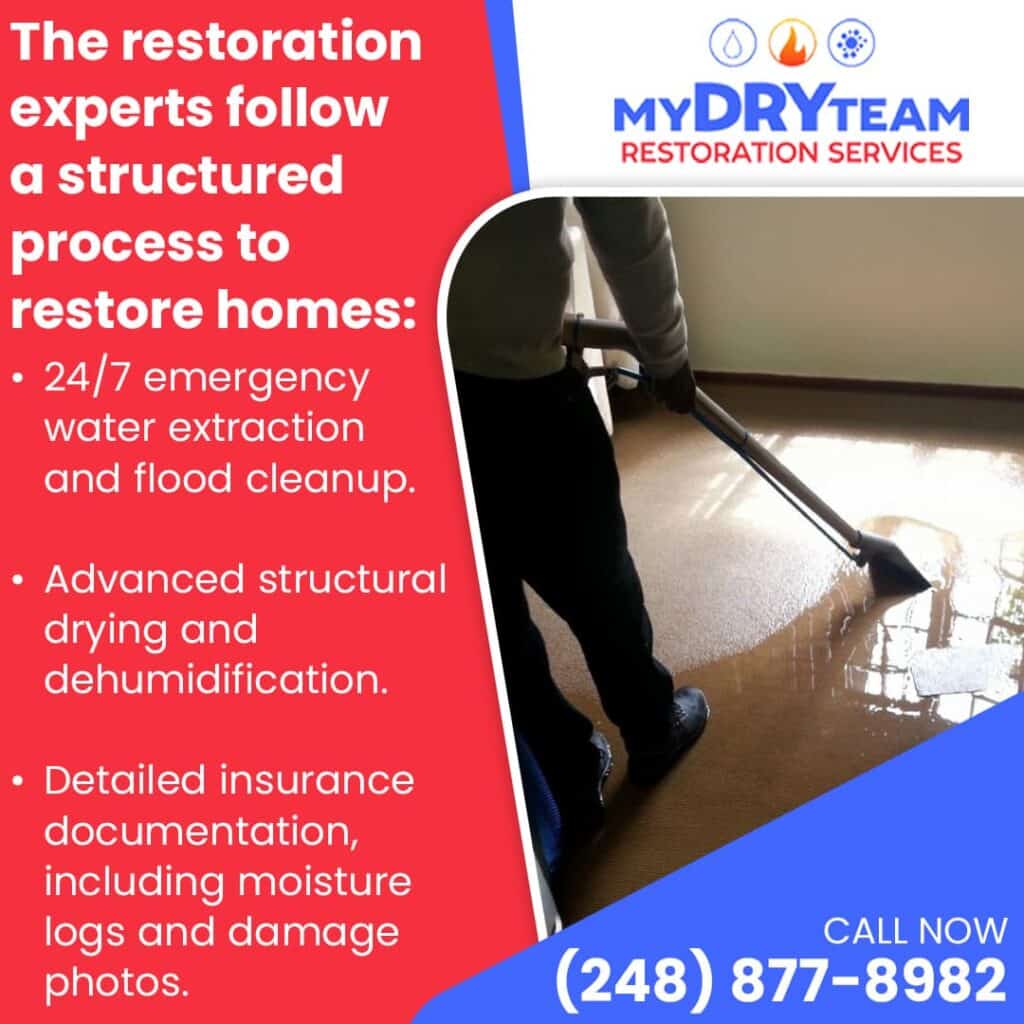
Call Now for Emergency Water Removal in Wixom, MI
Water damage can spread through a home and, if not addressed, may affect both structural materials and indoor safety conditions. My Dry Team Restoration Services provides 24/7 water and flood restoration services for Wixom homeowners who need fast response and reliable recovery support.
For immediate assistance, contact us at (248) 877-8982 or email office@mydryteam.com to schedule emergency service and begin the restoration process without delay.