Professional mold remediation involves locating moisture, containing affected areas, removing mold-contaminated materials, cleaning surfaces, drying the property, and addressing related damage. The work may also include repairs to drywall, flooring, insulation, ceilings, or other materials affected by moisture or mold.
At My Dry Team Restoration Services, we provide mold remediation services for homeowners in Southeast Michigan. Our process focuses on identifying the source of moisture, controlling contamination, cleaning affected areas, and restoring damaged parts of the property.
What Does a Professional Mold Remediation Process Include?
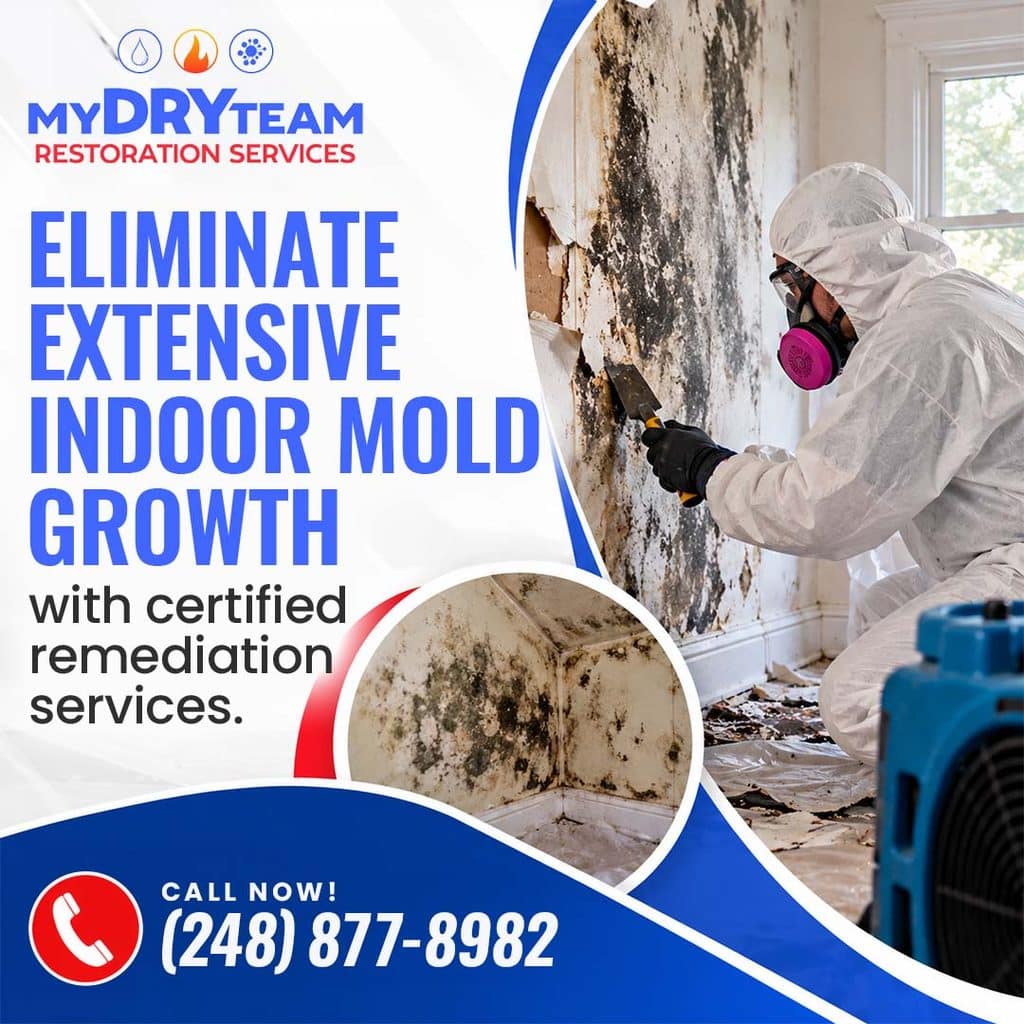
Professional mold remediation combines inspection, containment, removal, cleaning, drying, and moisture control. The work depends on the amount of mold, location, affected materials, and moisture source.
A typical project may include:
- Inspecting visible and hidden areas for mold and moisture
- Identifying leaks, flooding, condensation, or other moisture sources
- Establishing containment when conditions require it
- Using suitable air filtration and protective equipment
- Removing porous materials that cannot be cleaned
- Cleaning affected surfaces
- Drying damp building materials
- Repairing areas affected by water or mold
The U.S. Environmental Protection Agency (EPA) states that moisture control is central to controlling indoor mold. It also recommends cleaning mold and correcting the water problem that caused it.
How Does Inspection Identify the Source of Mold?
Inspection identifies visible growth, moisture conditions, and areas that may contain hidden contamination. Moisture meters and thermal imaging can help locate damp materials or temperature patterns that require closer examination.
Common moisture sources include:
- Plumbing leaks behind walls
- Basement water intrusion
- Roof leaks
- Condensation around windows or HVAC components
- Poor ventilation in moisture-producing rooms
Finding the moisture source connects mold removal with repairs needed to reduce recurring growth.
When Is Containment Used During Mold Removal?
Containment is used when remediation work could spread mold or contaminated dust into unaffected areas. The containment approach depends on the size and conditions of the affected space.
Limited containment may be appropriate for mold-affected areas between 10 and 100 square feet, depending on site conditions. The appropriate containment level depends on the size and location of the affected area and the potential for contamination to spread.
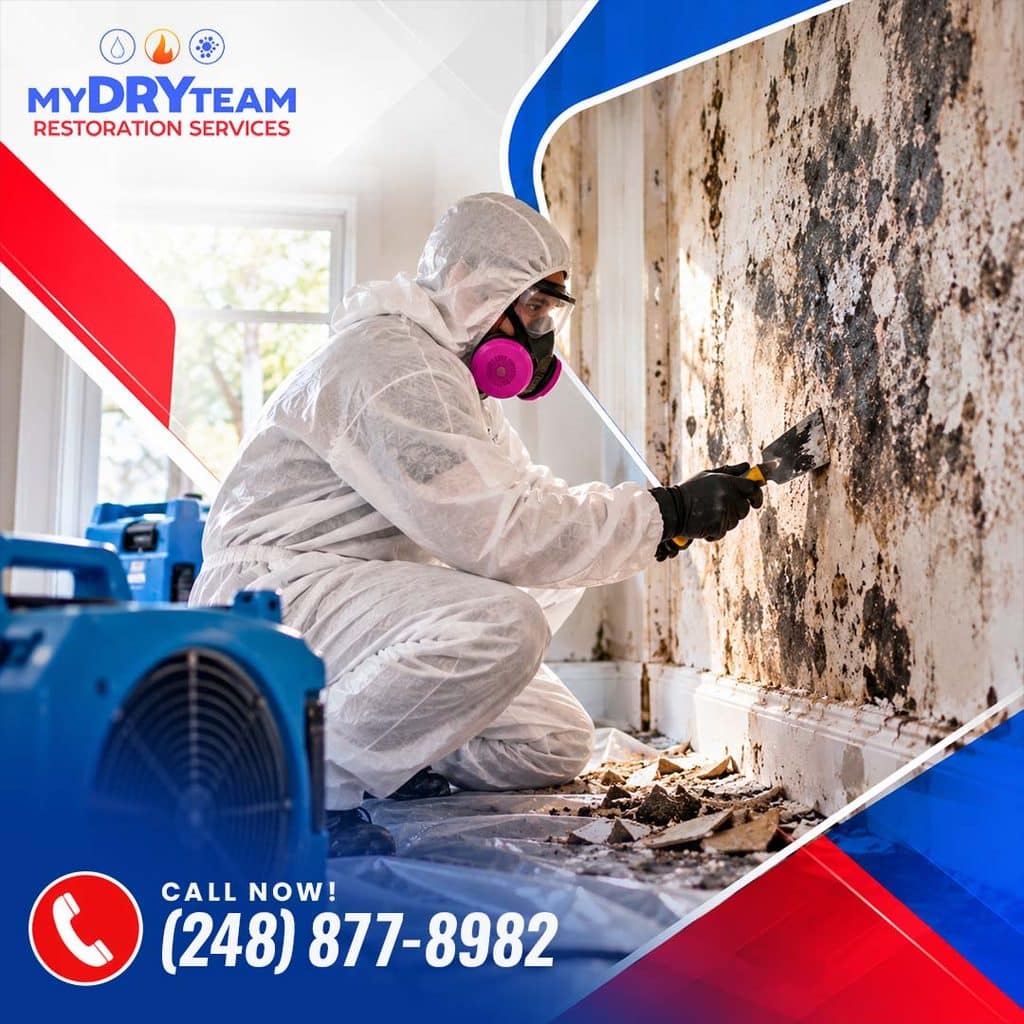
Our team may isolate the work area and use air filtration equipment when site conditions call for it. These measures help control airborne particles during cleaning and material removal.
What Happens During Mold Clean Up?
Mold clean-up in Commerce Township homes removes visible contamination, cleans affected surfaces, and handles materials that cannot be restored. Cleaning methods vary according to the material and extent of damage.
Hard surfaces may be cleaned and dried. Porous materials such as some drywall, carpeting, or ceiling materials may require removal when mold has penetrated them. Mold can remain in spaces within porous materials that are difficult to clean completely, making removal necessary in some cases.
Our company uses cleaning, filtration, drying, and material-removal methods based on the conditions identified during the project. We also address related water damage when needed.
How Does Restoration Follow Mold Remediation?
Restoration repairs building materials affected by moisture or mold after contaminated materials have been addressed. Work can include drywall, flooring, insulation, ceilings, and other damaged components.
The remediation and restoration have different purposes. Remediation addresses contamination and moisture conditions. Restoration returns affected parts of the property to usable condition.
Frequently Asked Questions
Can mold grow after a small water leak?
Yes. Mold can grow when moisture remains in building materials or indoor areas. A leak behind drywall, under flooring, or around plumbing can create conditions that support growth if the affected area does not dry properly.
Does mold always need to be tested?
No. Mold testing is not required for every mold cleanup project. The visual inspection and site information can help determine remediation needs, while air sampling is not always necessary to evaluate cleanup.
Can homeowners prevent mold after remediation?
Yes. Moisture control can reduce conditions that support mold growth. Fixing leaks, drying wet materials, controlling indoor humidity, improving ventilation, and reducing condensation can help prevent mold from returning.
How Can Homeowners Get Professional Help?
Professional mold mitigation can address mold growth, moisture sources, cleaning, and related property repairs in one coordinated project. My Dry Team Restoration Services provides 24/7 restoration services for homeowners throughout Southeast Michigan.
Call (248) 877-8982 or send an email to office@mydryteam.com for assistance with mold removal or mold cleanup.