Mold growth inside a property often starts with hidden moisture and slowly spreads across walls, ceilings, and structural materials. My Dry Team Restoration Services offers mold remediation, mold removal, and cleanup services designed to help address mold-related issues in residential and commercial properties. Our focus stays on restoring safe indoor conditions through practical and field-tested methods.
In Commerce Township, Michigan, changing weather patterns, basement humidity, and water intrusion create conditions where mold can develop quickly after leaks or flooding. We provide 24/7 response services to address these situations and support property owners with inspection, containment, and full remediation work tailored to each property’s condition.
Understanding Mold Growth In Homes
Mold grows indoors when moisture stays in building materials for extended periods.
We see this often in homes where water problems or airflow limits exist. Mold spores exist in the air naturally. They become a concern once they land on damp surfaces and begin to grow.
Common Causes Of Indoor Mold
Indoor mold develops after moisture enters a space and stays for a period of time.
We often see it tied to everyday household issues that seem small at the start but lead to hidden growth.
We commonly find mold linked to:
- Leaking pipes under sinks or inside walls
- Roof leaks that reach attic areas
- High indoor humidity from daily activities like cooking and showering
- Poor airflow in closed rooms
- Water spills that are not dried properly
We often explain that mold develops more from ongoing moisture than from a single incident.
Water Leaks, Humidity, And Poor Ventilation
Water leaks add moisture directly into materials like drywall and wood.
Humidity adds moisture to the air, which settles on cooler surfaces. Poor ventilation keeps that moisture trapped indoors.
These conditions often work together. A small leak combined with closed windows and limited airflow creates steady damp areas where mold forms. Bathrooms, kitchens, and laundry rooms often show this pattern.
Basement And Crawl Space Conditions
Basements and crawl spaces stay cooler and receive less airflow than upper floors. These areas often hold moisture longer after rain, plumbing issues, or ground seepage.
We frequently find mold in:
- Basement corners near foundation walls
- Around sump pump areas
- Crawl space joists and insulation
- Stored items are placed directly on the floors
In many homes, seasonal humidity adds more moisture to these spaces. Without drainage or airflow control, mold can form on wood and spread to nearby materials.
How Mold Spreads Across Surfaces And Materials
Mold spreads through airborne spores and contact with damp surfaces.
Once spores land on moisture, growth expands into porous materials like drywall, wood, and insulation.
We often see spread patterns such as:
- From a leak point into nearby wall sections
- Across the ceilings near the roof leaks
- Through HVAC systems that move spores between rooms
We focus on tracking both visible growth and hidden spread paths so the affected area is fully addressed during removal work.
Signs You May Need Mold Removal Services
We often see mold problems develop slowly when early warning signs go unnoticed. Mold can appear on visible surfaces or stay hidden behind walls and other areas, so noticing small changes in your property helps you take action sooner.
Visible Mold Growth On Walls Or Ceilings
Visible mold often appears as dark spots, green patches, or fuzzy growth on surfaces.
Common locations include:
- Bathroom ceilings near showers
- Basement walls exposed to moisture
- Window frames with condensation
- Areas near the roof or plumbing leaks
Visible mold usually signals a deeper issue behind the surface.
Musty Odors In Living Spaces
A musty smell often points to hidden mold growth. We frequently hear about odor changes before any visible signs appear.
This smell is common in:
- Closed rooms with little airflow
- Areas near HVAC vents
- Spaces with damp carpets or furniture
For example, a basement may smell damp even after cleaning, which can point to moisture inside the walls or flooring. In another case, a closet near plumbing lines may develop an odor without visible mold.
Odors often signal hidden moisture problems.
Water Damage History In The Property
Past water damage often creates conditions for mold growth later. Even repaired areas can hold hidden moisture if not fully dried.
Common situations include:
- Basement flooding after heavy rain
- Burst pipes inside the walls
- Roof leaks that were repaired
- Appliance leaks near the flooring
Moisture history often marks higher-risk areas.
Hidden Mold Indicators Behind Surfaces
Mold can grow behind walls, under flooring, or inside ducts without early visibility.
Signs may include:
- Bubbling or peeling paint
- Warped drywall or baseboards
- Soft or uneven wall areas
- Changes in indoor air quality
For example, a soft wall near a bathroom may indicate trapped moisture behind drywall. In another case, warped flooring near a sink may suggest subfloor damage.
Hidden mold often develops quietly while surface signs remain minimal.
Our Mold Remediation Process
We follow a step-by-step process that targets moisture sources, removes affected materials, and restores indoor areas. Each stage focuses on controlling the spread and handling mold-affected zones from start to finish.
Initial Inspection And Moisture Detection
We begin with a full inspection to locate visible mold and hidden moisture.
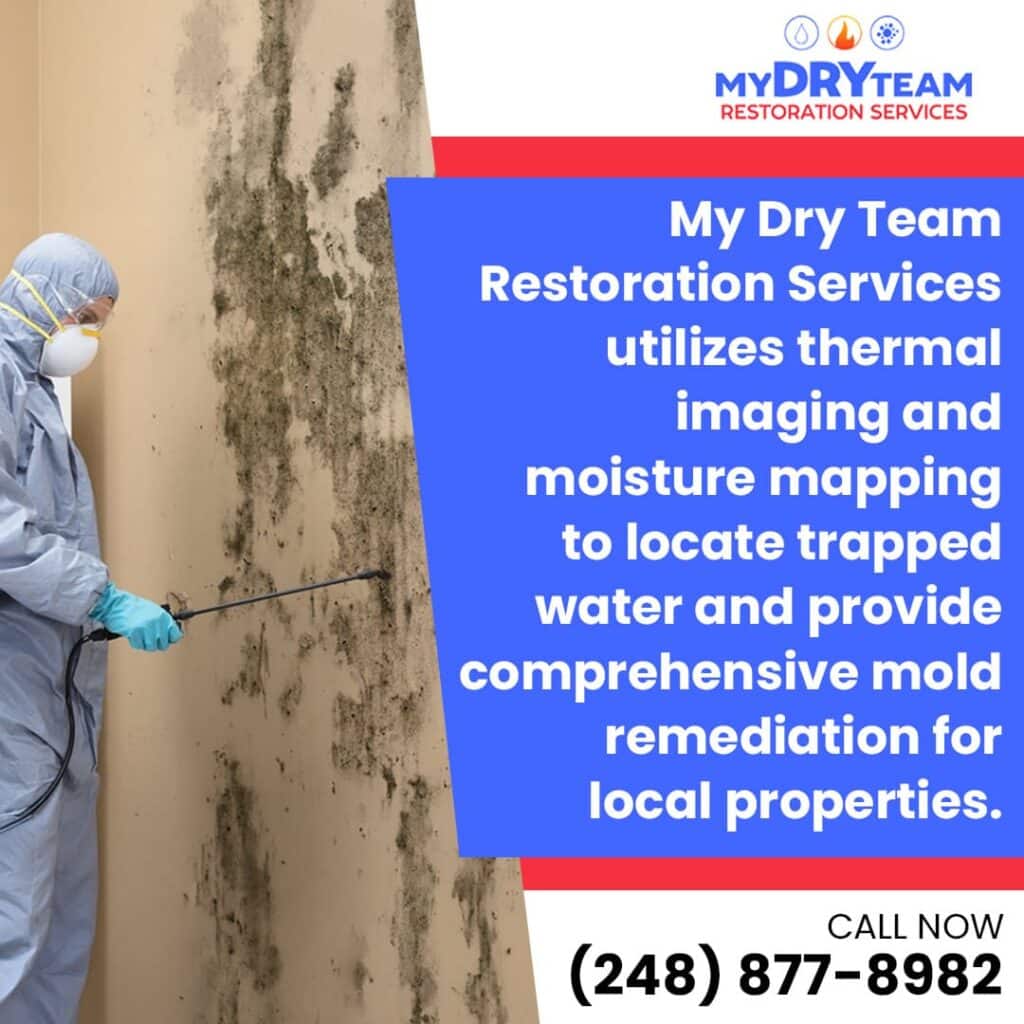
Our team uses moisture meters and thermal imaging to identify damp areas inside walls, floors, and ceilings.
A small wall stain may point to a larger hidden leak behind drywall. Basement surface mold may also indicate moisture inside foundation walls. This step helps us identify all affected areas before work begins.
Containment Of Affected Areas
We set up containment barriers to limit mold spread during removal.
We commonly use:
- Plastic sheeting to seal work zones
- Negative air pressure units
- Controlled entry points
A bathroom mold job may be sealed off from nearby rooms. Basement containment can also prevent spores from moving into upper levels during cleanup.
Mold Removal And Safe Disposal
We remove materials that cannot be cleaned, such as drywall, insulation, and carpet padding.
All materials are placed in sealed bags for safe disposal. Water-damaged drywall is often removed completely, while soaked carpet padding is discarded to stop further growth.
Drying, Cleaning, And Sanitization
After removal, we dry and clean affected areas using air movers and dehumidifiers. Surfaces may be treated with antimicrobial solutions to help reduce microbial presence after physical mold removal.
Exposed wall framing is cleaned after drywall removal. Basement floors are also dried and treated to reduce lingering moisture.
Final Verification And Prevention Steps
We finish with a walkthrough to confirm completed work and share prevention steps.
- Improving ventilation
- Fixing leaks or drainage issues
- Monitoring humidity levels
A homeowner may add a dehumidifier after cleanup. Repaired plumbing also helps reduce repeated moisture buildup.
Mold Inspection Vs Mold Testing
We often clarify the difference between mold inspection and mold testing for homeowners. Each service serves a different role in identifying mold issues inside a property.
Differences Between Inspection And Testing
A mold inspection focuses on identifying visible mold, moisture sources, and potential hidden conditions. Mold testing involves collecting air or surface samples for laboratory analysis to assess spore types and concentrations.
Inspection can locate mold behind a bathroom wall after a leak. Testing can detect airborne spores even when mold is not visible.
When Inspection Is Enough
Inspection is usually enough when mold or moisture is already visible.
- Visible mold on ceilings or walls
- Recent plumbing or roof leaks
- Damp basements with clear staining
Mold around a window after rain damage can be identified and planned for removal through inspection alone.
When Testing Is Recommended
Testing is useful when mold is not visible, but signs still appear indoors.
- Ongoing allergy-like symptoms indoors
- Musty smell with no clear source
- Past water damage without visible mold
A home with lingering odors after flooding may need air testing to check hidden spores.
Mold Clean-Up Methods
We follow structured mold clean-up methods that focus on removing airborne particles, treating affected surfaces, and handling damaged materials. Each step supports controlled cleanup and limits spread during the process.
HEPA Filtration And Air Scrubbing
We use HEPA filtration to capture airborne particles during cleanup. Air scrubbers run throughout the work area to reduce the movement of dust and spores.
During basement cleanup, scrubbers are placed near active work zones. HEPA vacuums are also used while removing drywall to control airborne spread during demolition.
Antimicrobial Treatment Application
We apply antimicrobial solutions after visible mold removal to treat remaining surface areas.
This is used on exposed wood framing, concrete surfaces, and wall cavities. After removing bathroom drywall, wall studs are treated before reconstruction begins. Basement surfaces are also cleaned after moisture issues are addressed.
Structural Cleaning And Material Removal
We clean or remove materials based on damage levels. Porous materials are often removed, while solid surfaces are cleaned and treated.
Drywall, insulation, and carpet padding may be removed when needed. Water-damaged drywall is cut out in basement areas, while subfloors are cleaned and dried before repair work continues.
Why Homeowners Choose My Dry Team Restoration
We support homeowners who need fast help with mold removal and clean-up.
Our work focuses on clear communication, structured methods, and consistent results throughout the process.
24/7 Emergency Response Availability
- Available day and night, including weekends and holidays
- Quick response for active water or mold issues
- Fast action to limit the spread in affected areas
A basement leak at night can be addressed quickly to reduce further damage.
Certified And Trained Technicians
- Trained in mold remediation and water damage response
- Use moisture detection and containment methods
- Follow step-by-step work based on site conditions
Hidden moisture behind bathroom walls is identified before removal work begins.
Insurance Claim Assistance Support
- Documentation of affected areas
- Support with claim-related details
- Coordination with adjusters during cleanup
After storm damage, affected zones are documented for the claim process.
Fast Response For Mold Emergencies
- Rapid arrival after service request
- Early containment of affected areas
- Reduced risk of wider interior damage
A kitchen leak reaching nearby walls is addressed before it spreads further.
Preventing Mold Growth In Your Home
We often see mold linked to moisture that stays indoors too long. Our focus is on reducing damp conditions, improving airflow, and spotting early warning signs in common areas.
Moisture Control And Ventilation Practices
- Use exhaust fans after showers
- Run dehumidifiers in damp rooms
- Open windows during dry weather
- Wipe wet surfaces quickly
Basement Protection Strategies
- Check sump pump operation
- Keep items off the floor
- Seal visible foundation cracks
- Direct outdoor drainage away from walls
Regular Inspection And Maintenance Tips
- Inspect under sinks and plumbing lines
- Check windows and door frames
- Review attic areas after storms
- Look behind water-using appliances
- Mold Remediation Services In Commerce Township
We provide remediation services in Commerce Township for homes and commercial buildings affected by moisture and mold growth. Our work focuses on local conditions, structured cleanup, and timely response.
Local Environmental Conditions Affecting Mold Growth
We often see mold linked to humidity, rainfall, and basement moisture in this area.
- Summer humidity indoors
- Basement seepage after snow melt
- Stormwater entering foundations
Basement walls may stay damp after spring flooding, leading to mold growth over time.
Residential And Commercial Service Coverage
We handle mold issues across residential and commercial properties.
- Homes with basement or attic mold
- Apartments with shared ventilation issues
- Offices and retail spaces with leaks
A home may need drywall removal, while a business may require HVAC cleaning.
Why Local Response Time Matters
We respond quickly in Commerce Township, Michigan, to limit mold spread after water damage.
A burst pipe can rapidly introduce moisture into walls and surrounding materials, sometimes within hours. Fast action helps reduce further damage and the cleanup scope.
Frequently Asked Questions
We often receive questions from homeowners about mold, moisture issues, and cleanup needs. Below are common ones with clear, shorter answers.
Q1: How quickly can mold start growing after water damage?
Under favorable conditions such as warmth, moisture, and organic materials, mold can begin growing within 24 to 48 hours after water exposure.
We often see this after leaks or flooding, where materials stay wet. The longer moisture remains, the higher the chance of visible growth and hidden spread.
Q2: Can mold come back after cleanup?
Yes, mold can return if moisture issues remain.
We remove affected materials and treat surfaces, but ongoing leaks or humidity can lead to regrowth in the same area.
Q3: Do I always need professional help for small mold spots?
Not always, but it depends on the source.
Small spots on surfaces may be cleaned, but if moisture is still present behind walls or flooring, the problem often returns without proper inspection and removal.

Take Action Today With My Dry Team Restoration Services
We at My Dry Team Restoration Services provide mold remediation and mold clean-up services across Commerce Township and nearby areas, with 24/7 availability for urgent situations.
If you notice mold growth, musty odors, or signs of past water damage in your property, our team is ready to respond with inspection, cleanup, and full restoration support tailored to your needs. Contact us anytime at (248) 877-8982 or email office@mydryteam.com to connect with our team.