
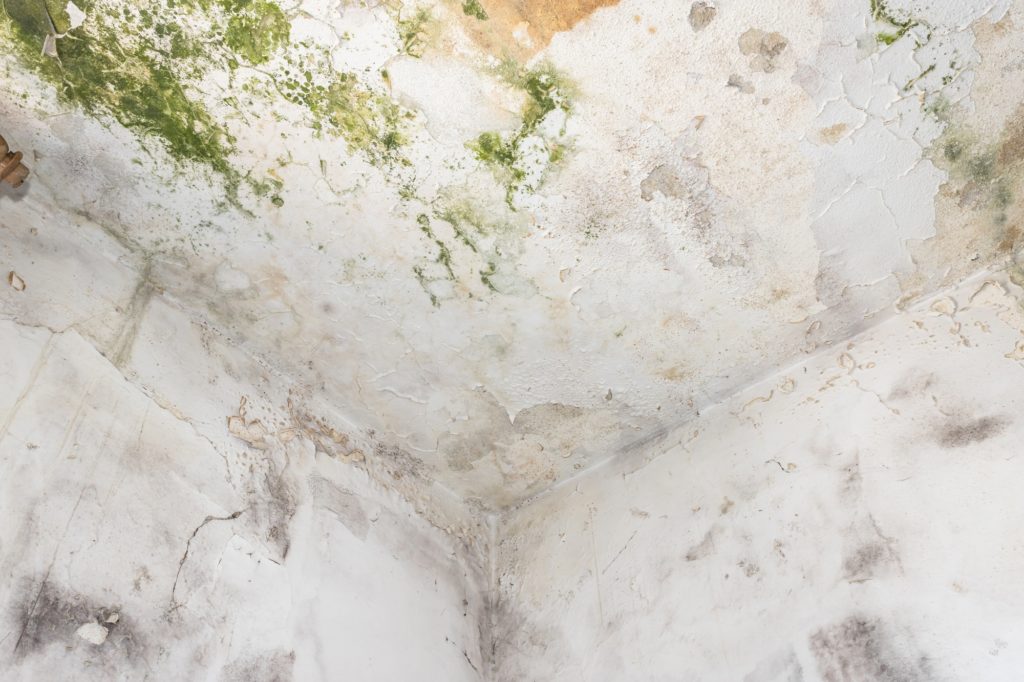
Basements in Wixom homes often carry hidden moisture after winter ends. We at My Dry Team Restoration Services in Commerce Township, Michigan, see this pattern every spring during inspections. Snowmelt, frozen pipe thaw cycles, and trapped humidity create conditions where mold begins to grow out of sight, especially in lower levels of homes.
Mold remediation, mold removal, and mold clean up become necessary when moisture stays unchecked in basements. We work with homeowners across Southeast Michigan to identify early signs of mold growth and address the source before it spreads into walls, flooring, and insulation. Spring is the time when winter moisture turns into active mold concerns, making early inspection an important step for protecting residential properties.
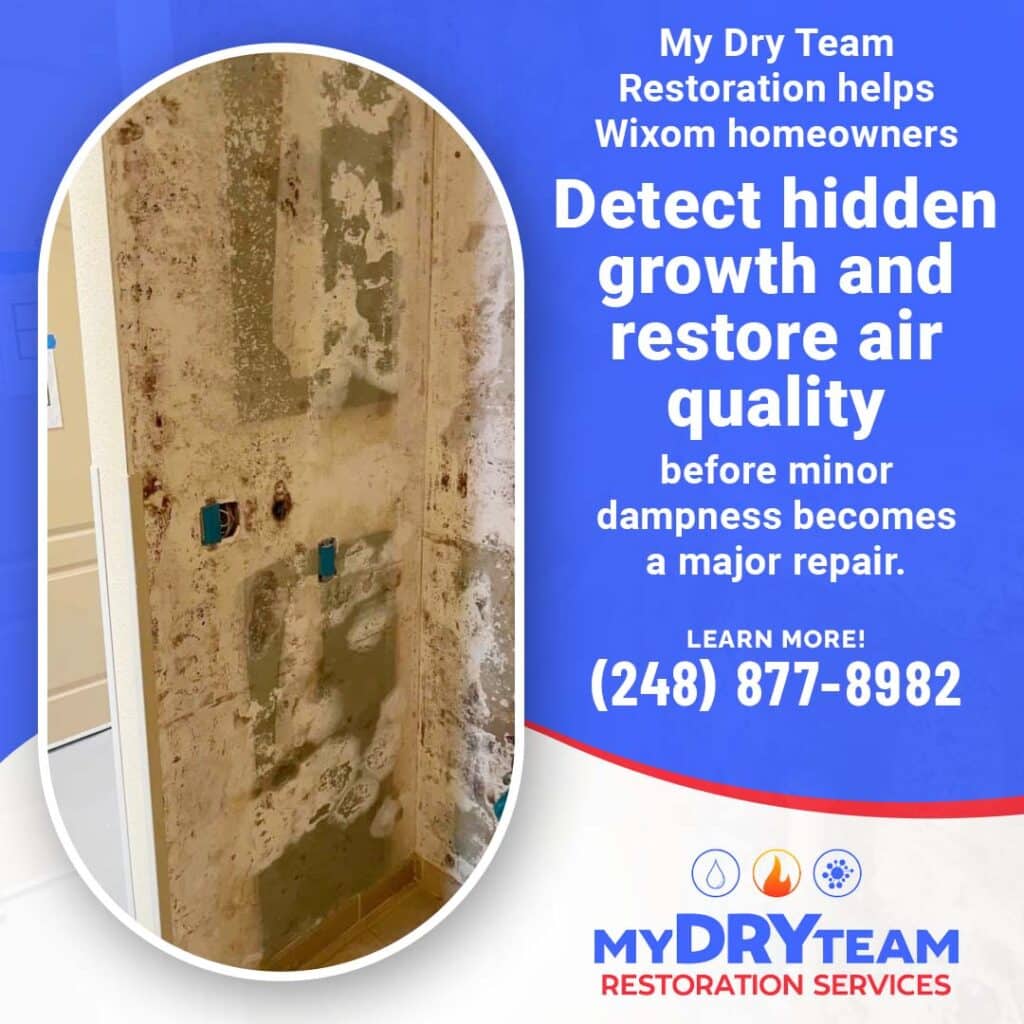
Introduction – Why Post-Winter Mold Is a Hidden Threat in Wixom Homes
Post-winter conditions in Wixom leave homes exposed to hidden moisture that often leads to mold growth in basements. We see this pattern often during inspections after the snow season ends.
Moisture stays trapped in lower levels of homes long after visible water dries. That hidden dampness supports mold activity that often requires removal services.
How Michigan winters create ideal mold conditions
Michigan winters bring repeated freezing and thawing that pushes moisture into homes. We regularly find that these cycles create long-lasting damp zones in basements.
Snowmelt, ice dams, and trapped moisture in basements
- Melted snow moves toward the foundation walls
- Ice dams push water under the roofing edges
- Basements hold moisture longer than upper floors
Temperature fluctuations leading to condensation
- Warm indoor air meets cold basement surfaces
- Water droplets form on pipes and concrete
- Moisture builds in corners and storage areas
Poor ventilation during the winter months
- Closed windows limit air movement
- Humidity stays inside sealed spaces
- Drying conditions slow down significantly
Why basements are the most vulnerable areas
Basements in Wixom homes face constant exposure to moisture from multiple sources. We often see early mold clean-up needs start in these spaces before spreading upward.
Below-grade moisture exposure
- Soil moisture presses against foundation walls
- Groundwater enters through small wall openings
- Concrete absorbs and holds dampness
Limited airflow and humidity buildup
- Air circulation stays restricted year-round
- Moist air settles and lingers longer
- Drying time increases after winter
Hidden leaks from pipes and foundation cracks
- Pipes may drip during freeze-thaw cycles
- Small cracks allow slow water entry
- Damage often stays out of sight until mold forms
Understanding Mold Growth After Winter in Southeast Michigan Homes
Mold activity often rises after winter in Southeast Michigan homes because moisture stays trapped longer than most homeowners expect.
We see this pattern frequently during early spring inspections in basements. Cold season conditions leave behind water sources that support mold growth. Once temperatures rise, those hidden damp areas become active again and spread quickly across materials.
Our team steps in to inspect these moisture-prone areas, identify hidden mold sources, and carry out targeted processes to stop further spread.
What causes mold to develop after cold seasons
Mold develops when moisture stays present on surfaces like wood, drywall, or insulation. After winter, we often trace the issue back to a few repeat conditions.
Water intrusion from melting snow
- Snow melts and moves toward the foundation walls
- Small wall gaps allow water entry
- Basement floors hold standing moisture
Frozen pipe leaks and thaw cycles
- Pipes freeze during cold snaps
- Thawing creates slow leaks inside the walls
- Water spreads before visible damage appears
High indoor humidity from sealed homes
- Windows stay closed for months
- Moist air builds up inside living spaces
- Basements collect the highest humidity levels
Common types of mold found in basements
Basement mold varies based on how long moisture stays and what materials are affected.
Surface mold vs. hidden mold
- Surface mold grows on visible walls or floors
- Hidden mold develops behind drywall or under flooring
- Hidden growth often requires full mold removal steps
Organic materials affected (wood, drywall, insulation)
- Wood absorbs moisture and weakens over time
- Drywall breaks down and supports mold colonies
- Insulation traps damp air and spreads spores
We often explain to homeowners that early clean-up of mold reduces the spread into structural materials. Once mold reaches insulation or framing, removal becomes more involved and time-consuming.
Warning Signs of Mold Growth in Your Basement
We often meet homeowners who notice changes in their basement long before they see full mold growth.
These early signals help guide faster remediation and reduce the scale of removal work later. Basements in homes tend to show both visible and hidden signs. We focus on both during every inspection.
Our team at My Dy team restoration inspects these warning signs closely, identifies the source of moisture, and carries out the required mold removal, remediation, and clean up to stop further spread.
Visible signs homeowners should never ignore
Visible signs often appear on walls, floors, or stored items. We recommend checking these areas after winter and after any water event.
Black or green patches on walls or flooring
- Dark spots spreading across drywall or concrete
- Greenish growth on wooden surfaces or baseboards
- Clusters forming near corners or storage areas
Water stains or peeling paint
- Yellow or brown marks on the basement walls
- Paint bubbling or separating from surfaces
- Signs of past water intrusion that stayed untreated
Damp surfaces
- Floors that stay cold and moist to the touch
- Walls showing consistent dampness
- Wet areas near sump pumps or foundation edges
Hidden signs of mold infestation
Mold often grows out of sight before it becomes visible. We rely on these signals during inspections.
Musty odors that linger
- An earth-like smell that stays in closed spaces
- Stronger scent near storage or wall edges
- Odor returns even after cleaning
Increased allergy or respiratory symptoms
- Sneezing or coughing indoors
- Eye or skin irritation during basement use
- Symptoms easing once outside
Persistent humidity or condensation
- Moist air collecting on pipes or windows
- Fogging on basement surfaces
- A damp feeling that does not go away
Why Immediate Mold Inspection Matters After Winter
We see a clear pattern each spring in Wixom homes where winter moisture turns into active mold growth.
A timely inspection helps us catch issues before they spread deeper into building materials. Basements that stay damp after winter often develop mold behind surfaces. That growth changes how we approach the removal work later on.
Preventing long-term structural damage
Mold affects building materials in ways that weaken their strength over time. We often find damage hidden behind finished basement walls.
Mold weakening drywall, wood, and insulation
- Drywall softens and crumbles with moisture exposure
- Wood framing loses strength as mold spreads
- Insulation traps damp air and supports further growth
Cost escalation if left untreated
- Small patches expand into larger contaminated areas
- More materials require removal during cleanup
- Repair work becomes more extensive over time
How early detection saves homeowners money
Early inspection helps reduce the scale of mold clean-up work and limits structural repair needs.
We recommend checking basements shortly after winter ends. This step often prevents mold from spreading into deeper building layers that require full remediation and reconstruction.
Professional Mold Inspection vs DIY Checks
We often hear homeowners ask if a quick basement check is enough after winter.
We handle both DIY findings and full inspections, and the difference usually shows up once hidden moisture is involved.
Basements in Wixom homes can look dry on the surface while moisture stays trapped behind walls or under flooring. That is where the remediation process often begins.
What homeowners can safely check themselves
Homeowners can carry out basic checks without special equipment. We recommend starting with visible areas and obvious moisture sources.
Visual inspection of basement surfaces
- Look at walls, floors, and corners for discoloration
- Check stored items near exterior walls
- Notice any dark spots or surface changes
Checking for leaks or moisture sources
- Inspect around sump pumps and water lines
- Look for dripping pipes or damp joints
- Check basement floors after heavy snowmelt
These steps help identify early warning signs, but they do not reveal hidden clean-up needs behind finished surfaces.
Why is professional inspection more accurate
Professional inspections use tools that detect moisture and mold activity beyond what the eye can see.
At My Dry Team Restoration Services, we rely on this approach during every removal assessment.
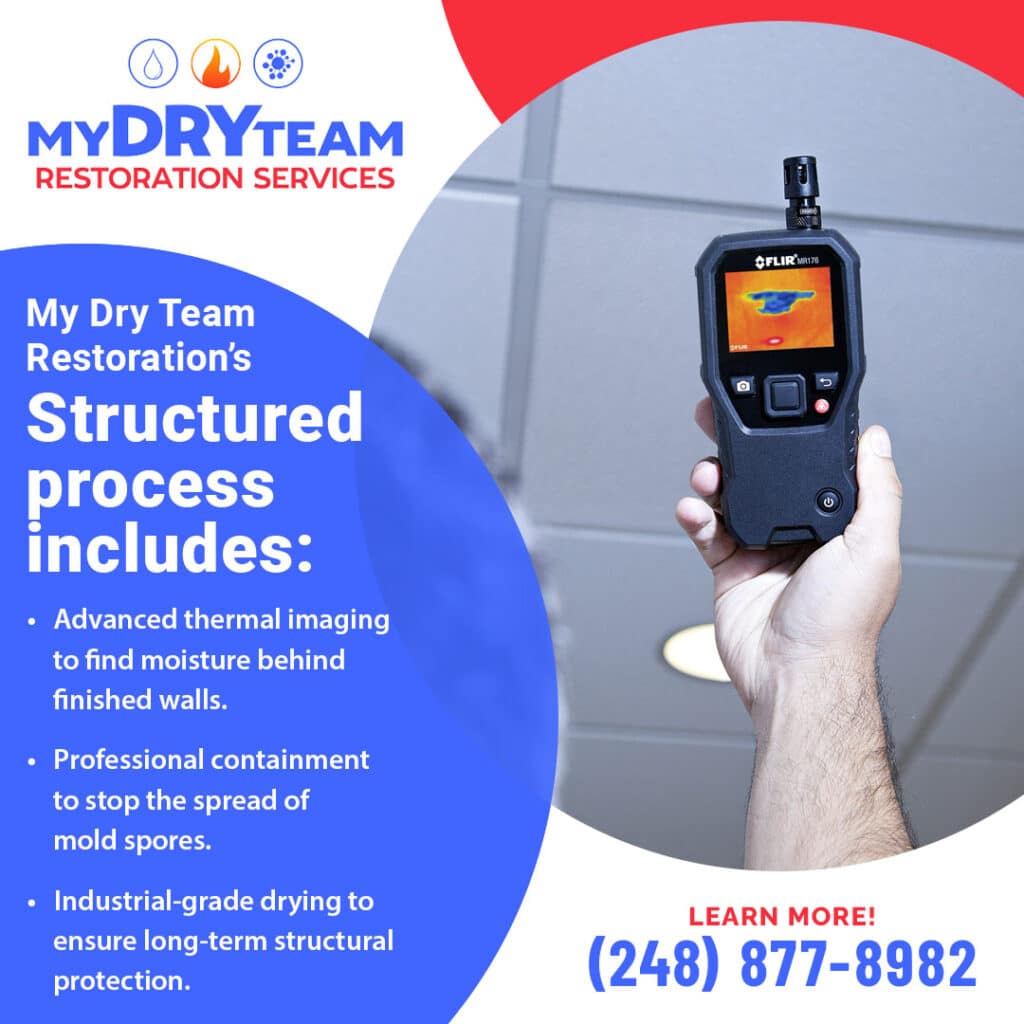
Moisture meters and thermal imaging
- Measure dampness inside walls and flooring
- Detect cold spots linked to water intrusion
- Identify moisture patterns not visible on surfaces
Air quality testing and hidden mold detection
- Collect samples from the basement air spaces
- Identify spores circulating indoors
- Reveal mold growth behind sealed areas.
When to call a certified professional
Certain signs point to deeper mold issues that require trained inspection and remediation support. At My Dry Team Restoration, we respond quickly in these situations.
Persistent odor or recurring dampness
- Musty smell returning after cleaning
- Moisture that does not dry out
- The basement air feels consistently heavy
Post-water damage situations
- Flooding from snowmelt or pipe leaks
- Basement water intrusion after storms
- Any event where surfaces stayed wet for days
We often see that early professional inspection reduces the scale of removal work and limits how far mold spreads into structural materials.
The Mold Remediation Process Explained
We follow a structured approach for remediation in Wixom homes, especially after winter moisture builds up in basements. Each step targets both visible mold and hidden growth behind surfaces.
This process supports safe and proper clean-up while addressing the moisture source behind the issue.
Step 1 – Inspection and moisture detection
We start by locating where mold is growing and why moisture is present. Many issues begin behind finished basement areas.
Identifying hidden mold sources
- Check behind the drywall and baseboards
- Inspect under the flooring and storage areas
- Trace leaks from pipes or foundation walls
Moisture readings guide us toward areas that need closer attention during remediation.
Step 2 – Containment and air filtration
We isolate affected areas before removal begins. This limits the spread during cleanup work.
HEPA filtration and negative air pressure
- HEPA filters capture airborne mold particles
- Containment barriers separate clean and affected zones
- Air pressure control keeps spores from moving outward
This step helps maintain cleaner air during the removal process.
Step 3 – Mold removal and mold clean up
We remove contaminated materials and treat affected surfaces. This step focuses on stopping active growth.
Safe removal of contaminated materials
- Cut out damaged drywall and insulation
- Remove affected flooring sections
- Dispose of contaminated materials following safety standards
Antimicrobial treatments
- Treat remaining surfaces to reduce regrowth
- Apply solutions to framing and exposed areas
- Target spots where moisture was present
Step 4 – Drying and moisture control
We remove remaining moisture to stop mold from returning. Basements often need extended drying after winter.
Dehumidification and prevention strategies
- Industrial dehumidifiers reduce indoor humidity
- Air movement helps dry enclosed areas
- Leaks and entry points are addressed
Step 5 – Post-remediation verification
We review treated areas after cleanup to confirm conditions are stable. This step follows mold removal work.
- Recheck moisture levels in affected zones
- Inspect cleaned surfaces for remaining growth
- Document results for homeowner records and insurance needs
We often find that proper drying and follow-up checks reduce repeat clean-up needs in basement environments.
Seasonal Maintenance Tips
We encourage homeowners to follow a seasonal routine after winter ends. This reduces the chance of hidden moisture staying in basement areas.
| Task Area | What You Should Do | Why It Matters |
| Post-winter basement inspections | Walk through basement walls and flooring | Helps spot early moisture issues |
| Look for damp spots after snowmelt | Identifies water entry points | |
| Check stored items for moisture exposure | Prevents hidden mold growth | |
| Watch for changes in odor or surface texture | Detects early mold activity | |
| Gutter and drainage system maintenance | Clean gutters to allow proper water flow | Prevents water overflow near the foundation |
| Check downspouts for correct drainage direction | Moves water away from the home | |
| Keep water away from foundation walls | Reduces basement moisture risk | |
| Inspect yard grading after storms or thaw cycles | Supports proper drainage flow |
Moisture control strategies for homeowners
We focus on controlling humidity and stopping water entry at the source. These steps help reduce conditions that support mold growth.
Dehumidifiers and ventilation improvements
- Run a dehumidifier during humid months
- Keep basement air moving with fans or vents
- Open airflow paths between rooms when possible
- Maintain steady indoor humidity levels
Fixing leaks and foundation cracks
- Check pipes for slow dripping or condensation
- Seal visible cracks in foundation walls
- Repair sump pump issues quickly
- Address roof or window leaks that reach lower levels
These actions help limit damp zones where mold often starts growing again.
Why Wixom Homeowners Trust My Dry Team Restoration Services
We work with homeowners who need fast support after winter moisture issues lead to basement mold problems.
Our focus stays on quick response, clear communication, and structured mold remediation from start to finish. Each service we provide supports safe removal and proper clean up while addressing the source of moisture inside the property.
- Fast response for basement mold and moisture issues after winter
- Clear communication throughout the entire restoration process
- Structured remediation process from inspection to completion
- Safe methods of removal of mold that target affected materials
- Thorough clean-up focused on visible and hidden growth
- Attention to moisture sources to help reduce repeat issues
- Support for homeowners across Wixom and Southeast Michigan
24/7 emergency response and rapid arrival times
We stay available around the clock for urgent restoration needs. Basement water and mold issues often develop without warning after winter conditions shift.
60-minute response advantage
- Our team responds quickly to urgent calls
- We arrive prepared to inspect affected areas
- Early action helps reduce mold spread inside homes
- Faster response limits deeper material damage
We often find that early arrival reduces the size of the affected area and shortens overall restoration time.
Conclusion – Don’t Wait for Mold to Spread This Spring
We see many homeowners discover basement mold only after winter ends. At that point, moisture has already stayed long enough for mold growth to spread behind walls and flooring.
Spring is the moment when hidden winter moisture becomes active. That shift often leads to faster mold growth in basements that stay damp through colder months.
Why post-winter inspections are essential
We recommend checking basements soon after winter because moisture left behind from snowmelt and thaw cycles often sits unnoticed for weeks. Early inspection helps us identify conditions that support remediation needs before they expand.
Preventing costly damage early
- Moisture caught early limits spread into the drywall and framing
- Smaller affected areas reduce the removal process.
- Faster response lowers the repair scope for flooring and insulation
- Early clean-up helps keep structural materials intact
We often see that homes inspected right after winter show fewer deep contamination issues compared to those checked months later. Basements respond quickly to seasonal moisture, and delays allow mold to move from surface growth into hidden areas.
We support homeowners by addressing mold concerns at the source and guiding them through proper cleanup and restoration. Early action after winter often sets the tone for how much work is needed later in the year.
For support with inspections and mold activity, My Dry Team Restoration Services remains available for fast response across Southeast Michigan.
Take Action Now: Stop Basement Mold Before It Grows
We support Wixom homeowners who notice basement moisture or early mold signs after winter. Quick action helps reduce the spread of mold and limits the need for extensive mold remediation or removal work later.
We offer 24/7 response for inspections, clean-up, and emergency restoration support. Our team is ready to assess basement conditions and guide the next steps based on what we find.
Schedule a mold inspection today and reach us at (248) 877-8982 for service requests.