
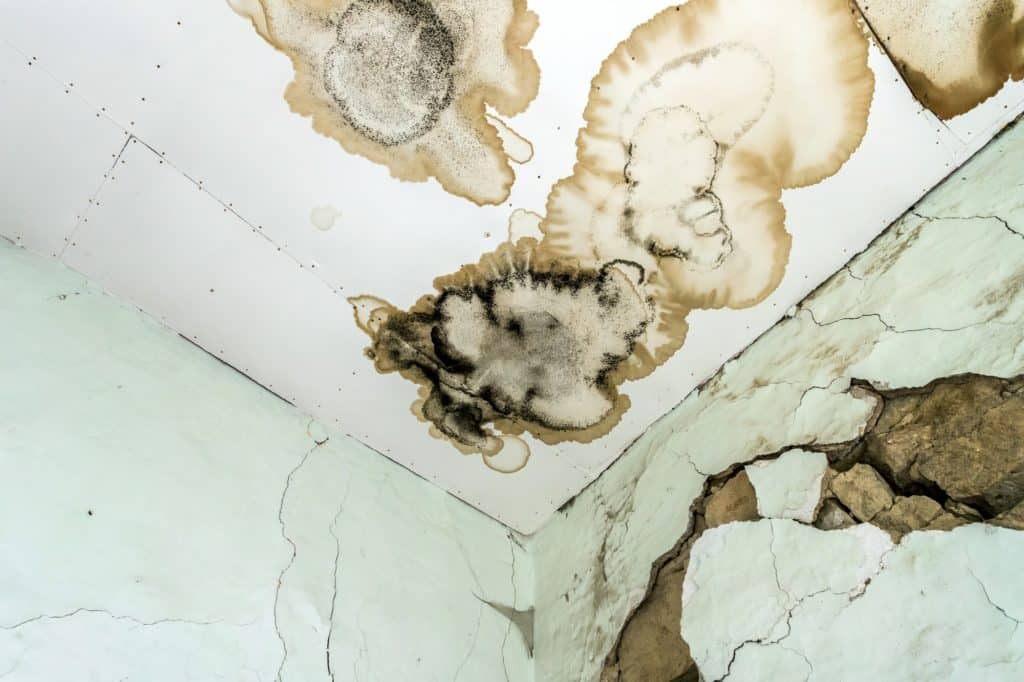
Mold growth in homes often goes unnoticed, especially during the winter months. At My Dry Team Restoration Services in Commerce Township, Michigan, we frequently help homeowners dealing with hidden moisture and mold removal problems. Cold exterior surfaces, indoor heating, and trapped humidity create conditions where mold can grow behind walls, under flooring, and in other unseen areas.
We help homeowners identify early warning signs and tackle mold clean-up before it spreads. Using professional inspections, containment, and drying techniques, we address both visible and hidden mold. From remediation to structural repairs, our solutions restore homes and protect building materials. This guide explains why winter increases mold risks and how we help homeowners manage the problem efficiently.
How Winter Moisture Creates Ideal Conditions for Mold Growth
Winter moisture can create hidden risks in homes that many property owners overlook. Cold temperatures, limited ventilation, and water intrusion combine to create a perfect environment for mold growth. Acting early prevents damage to walls, ceilings, and structural materials.
Condensation Caused by Temperature Differences
Condensation forms when warm indoor air meets cold exterior surfaces.
This often occurs on windows, walls, and ceilings, letting moisture seep into drywall or insulation.
- Water droplets along window panes or walls
- Moisture trapped behind furniture or in wall corners
- Cold bathroom ceilings are accumulating condensation
A living room with large south-facing windows may trap moisture between the glass and the wall. Minimal heat in bathrooms can create condensation on ceiling corners. Checking these areas regularly allows us to prevent hidden mold growth.
Reduced Ventilation During Winter Months
Sealed homes trap humid air, creating areas where moisture lingers.
- Stagnant air in basements or attics
- Small utility closets with poor circulation
- Spaces around furnaces or water heaters
Monitoring airflow, using vents, or running a portable dehumidifier helps reduce humidity and prevent mold from spreading into hidden areas.
Common Winter Water Intrusion Issues
Water leaks and intrusions occur more frequently in winter than many realize.
Ice dams, burst pipes, and basement seepage introduce moisture into walls and floors.
- Ice dams redirect melting snow into attics
- Leaking or burst pipes affecting walls and floors
- Basement seepage from melting snow or failing sump pumps
Quick response prevents damage from spreading. For example, a minor ice dam leak in a Commerce Township home was stabilized promptly, keeping mold from developing.
Where Hidden Mold Develops in Commerce Township Homes
Mold often grows in hidden areas, causing damage before homeowners notice.
Identifying these areas early allows us to remove moisture and stop mold from spreading.
Behind Walls and Under Flooring
Mold thrives behind walls and under floors where moisture is trapped.
Drywall and insulation absorb water from leaks or condensation, creating ideal conditions for growth.
- Moisture trapped in wall cavities
- Saturated insulation from hidden leaks
- Slow damage from repeated water exposure
A small plumbing leak behind a kitchen wall may remain unnoticed for weeks. Hidden moisture under the flooring can lead to mold along the subflooring. Detecting these areas allows for complete remediation.
Basements, Crawl Spaces, and Attics
Poor drainage, high humidity, and melting snow create damp conditions in these areas. Limited airflow lets moisture linger longer than in other parts of the home.
- Humid basements with slow drainage
- Crawl spaces with minimal ventilation
- Attics affected by roof leaks or snowmelt
Melting snow entering an attic cavity can cause mold along rafters. Addressing these areas quickly prevents larger structural problems.
Around Windows, Doors, and Roofing Systems
Gaps in seals or insulation allow moisture to enter, while freeze-thaw cycles worsen the problem.
- Improperly sealed windows and doors
- Insulation gaps near the roof edges
- Repeated freeze-thaw exposure
Minor leaks around window sills or roof junctions often go unnoticed. Early professional removal protects wood framing, drywall, and other structural materials.
Early Warning Signs of Hidden Mold Damage
Hidden mold often grows quietly. Spotting early signs allows our team to act before damage spreads to walls, floors, or structural components.
Visual Indicators Inside the Home
Mold can appear as stains, discoloration, or dark patches.
Paint may bubble or peel where moisture is present.
- Dark streaks on walls or ceilings
- Peeling or flaking paint
- Stains near plumbing or window sills
In one Commerce Township home, dark patches on a bathroom ceiling revealed hidden mold behind drywall. Early detection lets us treat the area before it worsens.
Structural and Material Changes
Warped wood or sagging drywall can indicate hidden mold. Damp spots often linger in corners, under flooring, or along baseboards.
- Soft or warped wood
- Sagging or crumbling drywall
- Persistent damp areas
We once found warped subflooring under a kitchen due to a hidden pipe leak, which required professional removal.
Unusual Odors and Indoor Conditions
Musty smells or high humidity often reveal hidden mold.
Condensation on walls or windows signals ongoing moisture problems.
- Persistent musty odors
- Condensation on walls, windows, or ceilings
- Damp spots that don’t dry naturally
Basements and attics are common trouble spots. Addressing these areas quickly stops mold from spreading further.
The Cost of Ignoring Mold Problems in Winter
Ignoring winter mold can lead to serious damage.
Minor leaks or condensation can weaken structural materials and lead to costly repairs. Acting early keeps problems manageable and protects property value.
Structural Damage and Material Deterioration
Mold and moisture weaken drywall, insulation, and wood framing over time.
Small leaks left untreated compromise walls, floors, and ceilings.
- Drywall softens or crumbles
- Insulation loses effectiveness
- Wood framing warps or sags
A hidden kitchen pipe leak dampened drywall and floor joists. Early intervention prevented more extensive damage.
Increased Repair and Restoration Costs
Small water issues can escalate into major repairs, affecting floors, ceilings, and foundations.
- Flooring replacement after prolonged dampness
- Ceiling panels damaged by water
- Foundation or subfloor repairs
A basement leak left untreated caused widespread floor damage. Quick mold removal and drying would have prevented costly restoration.
Impact on Property Value
Mold reduces property value and complicates sales.
Buyers and inspectors notice past water damage, affecting offers.
- Mold stains are visible in inspections
- Structural concerns are lowering confidence
- Documentation affecting buyer offers
Addressing mold promptly preserves structure and long-term investment.
Why DIY Mold Clean Up Often Falls Short
Many homeowners attempt to tackle mold removal themselves, but we often see these efforts fall short.
We’ve encountered homes where DIY cleaning only addressed surface mold, leaving hidden moisture behind.
Surface Cleaning vs. Full Mold Removal
Simply wiping away visible mold does not remove hidden colonies.
Mold can thrive behind drywall, beneath flooring, or inside insulation, making surface-only solutions ineffective.
- Mold often reappears after superficial cleaning
- Damp, hidden areas continue feeding growth
- Temporary solutions fail to dry structural materials fully
For instance, a homeowner in Commerce Township scrubbed a bathroom ceiling, believing the problem was solved. Within a week, mold returned. Our team removed affected sections, treated the underlying moisture, and applied professional drying techniques to stop recurrence.
Risk of Spreading Mold Contamination
Improper handling of mold can worsen the problem.
Spores can become airborne, contaminating furniture, closets, basements, and even HVAC systems.
- Airborne spores settling on unaffected surfaces
- Cross-contamination between rooms
At My Dry Team Restoration Services, we use containment barriers and air filtration to control spores during removal, protecting the rest of the home from contamination.
Lack of Proper Equipment and Containment
DIY approaches often lack industrial-grade tools for complete removal and drying. Without professional equipment, residual moisture can remain, allowing mold to regrow.
- Incomplete drying leaves damp surfaces
- No HEPA filtration or proper containment
- Partial removal leaves affected materials behind
We bring specialized equipment to every project, including dehumidifiers, HEPA vacuums, and air scrubbers. This allows us to remove mold fully and dry all surfaces, reducing the chance of future growth and protecting structural materials.
Professional Mold Remediation: A Complete Solution
Our team provides complete remediation that addresses both visible and hidden growth.
Our approach not only removes mold but also restores affected areas safely, preventing future problems.
Detailed Inspection and Moisture Detection
A thorough inspection identifies both overt and concealed mold.
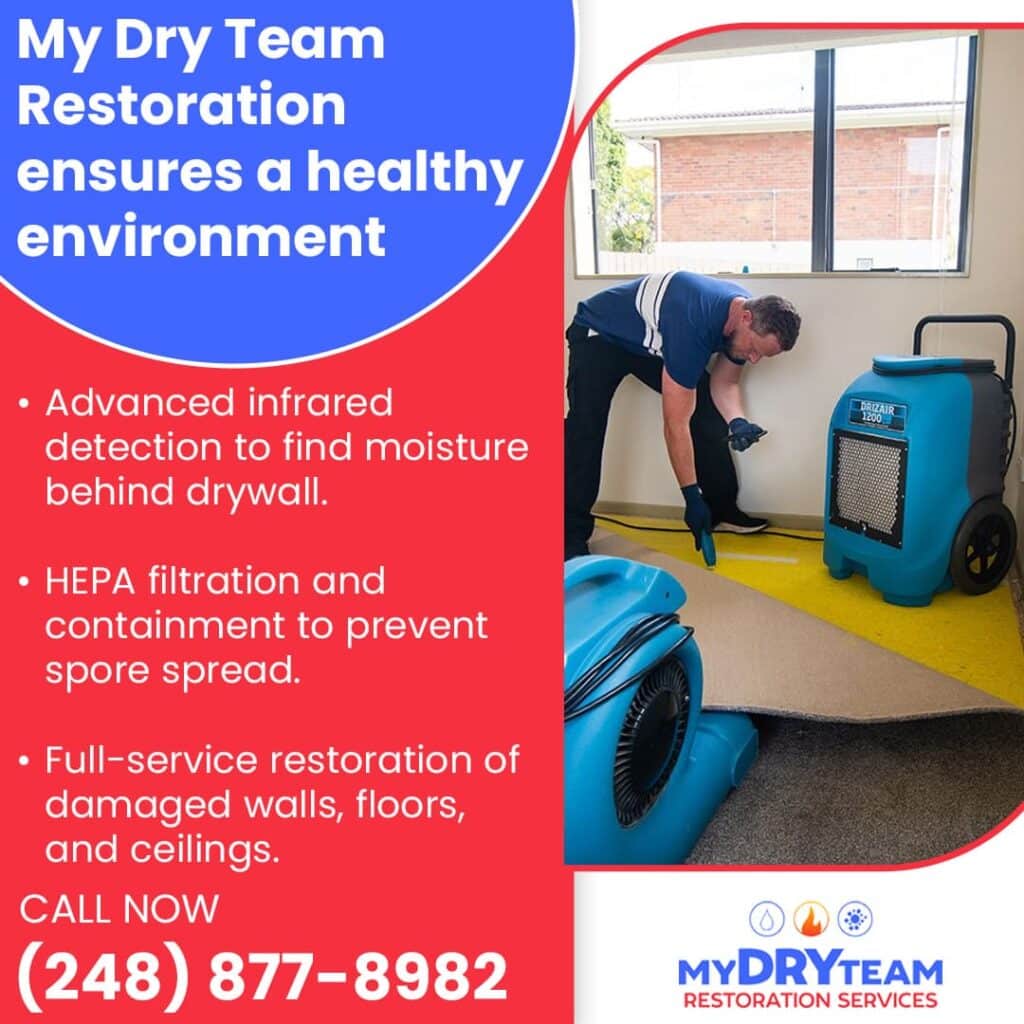
We use moisture meters, infrared cameras, and other tools to locate leaks behind walls, under floors, and in insulation.
- Detecting plumbing, roofing, or window leaks
- Locating moisture behind drywall or flooring
- Mapping hidden mold-prone areas
For example, a Commerce Township basement with laminate flooring was carefully assessed. By locating hidden moisture, we prevented further mold spread and targeted remediation efficiently.
Containment and Controlled Mold Removal
We isolate affected areas to prevent mold spores from spreading during cleanup.
- Polyethylene barriers around walls and floors
- HEPA air scrubbers to trap airborne spores
- Safe removal of contaminated materials
This method protects unaffected areas of the home while allowing us to remove mold completely.
Advanced Drying and Dehumidification
Removing moisture is key to stopping mold.
We use industrial dehumidifiers and targeted airflow to stabilize indoor humidity.
- Drying walls, ceilings, and floors thoroughly
- Continuous monitoring until surfaces are fully dry
In one Commerce Township kitchen, a damp subfloor caused by a minor pipe leak was fully stabilized with advanced drying techniques, preventing mold recurrence and protecting the home’s structure.
Restoration and Long-Term Prevention
After remediation, we repair structural damage and reduce the risk of future growth.
- Rebuilding walls, floors, or ceilings
- Applying moisture-resistant treatments
- Addressing drainage or leak issues
Follow-up inspections confirm surfaces are dry, treated, and safe, providing long-term protection against hidden mold growth.
Why Winter Is the Right Time for Mold Remediation
Winter provides a unique opportunity to address mold before the spring thaw increases moisture risks.
We notice that cold surfaces and indoor condensation make hidden leaks and damp areas easier to detect, allowing us to act proactively.
Preventing Further Damage Before Spring Thaw
Snow accumulation and ice along roof edges can infiltrate basements, attics, and crawl spaces, creating conditions for mold growth.
- Snow along the roofs is causing leaks
- Basements and foundations absorbing meltwater
- Small leaks worsen if left untreated
Early intervention during winter prevents minor issues from turning into widespread structural damage. Our Commerce Township team often stops winter moisture problems before they escalate in spring.
Easier Detection of Moisture Problems
Cold winter surfaces reveal condensation patterns and damp spots that are otherwise difficult to detect.
- Moisture forming on windows, walls, or ceilings
- Damp corners in attics or basements
- Condensation highlighting poorly insulated surfaces
By inspecting these areas, we locate hidden leaks and moisture-prone spots, allowing targeted remediation before mold spreads further.
Protecting Your Home Before Peak Humidity Seasons
Addressing mold and moisture in winter reduces the risk of rapid growth during spring and summer, when warm weather accelerates mold proliferation.
- Preemptive removal in moisture-prone areas
- Stabilizing indoor humidity before warm months
- Treating hidden damp spots in basements or crawl spaces
Scheduling remediation during colder months allows our team to fully dry and treat affected areas, preventing accelerated mold growth and long-term damage.
Why Homeowners Trust My Dry Team Restoration Services
We provide fast, reliable mold remediation and restoration across Southeast Michigan, handling every step from emergency response to full repairs.
24/7 Emergency Response Across Southeast Michigan
Rapid response limits damage.
- On-site within 60 minutes
- Immediate assessment and containment
- Quick water extraction and drying
IICRC-Certified Professionals and Proven Methods
Certified technicians follow industry standards.
- S520 mold remediation protocols
- Consistent inspection and removal methods
Advanced Equipment for Mold Removal and Drying
Industrial-grade tools remove mold fully and dry areas completely.
- HEPA vacuums, air scrubbers, negative air machines
- Industrial dehumidifiers
Full-Service Restoration from Cleanup to Repairs
At My Dry Team Restoration Services, we don’t stop at removing molds.
We restore your home fully, repairing structural and cosmetic damage while protecting it from future moisture issues.
Insurance Claims Assistance
We guide homeowners through the insurance process to simplify claims and communicate directly with adjusters.
This approach lets homeowners focus on returning home safely while we handle both restoration and paperwork efficiently.
Preventative Steps to Reduce Winter Mold Risks
Simple steps help reduce mold risk during the winter months.
Control Indoor Humidity Levels
- Use portable dehumidifiers
- Keep indoor humidity below 50%
- Monitor moisture-prone rooms
Address Water Issues Immediately
- Repair leaks quickly
- Dry wet floors and furniture
- Inspect areas near windows or roofs
Improve Ventilation in Moisture-Prone Areas
- Use exhaust fans
- Open windows occasionally
- Install vents in attics or crawl spaces
Schedule Routine Property Inspection
- Check behind walls and under floors
- Inspect basements and attics
- Watch for condensation or stains
When to Call for Professional Mold Remediation
Mold can grow quietly behind walls, under floors, and inside insulation.
Contacting our team early lets us address both visible and hidden mold, restore affected areas, and prevent small issues from becoming major damage.
Persistent Moisture or Water Damage
- Moisture lingering after leaks
- Damp areas in basements, crawl spaces, or behind appliances
- Our team locates hidden moisture, removes affected materials, and dries areas completely to stop mold spread.
Visible Mold Growth or Spreading Areas
- Dark patches on walls, ceilings, or window sills
- Discoloration around doors or flooring
- We isolate affected areas to prevent spores from spreading and perform thorough remediation.
Recurring Mold After Previous Clean-Up Attempts
- Mold returning on previously cleaned surfaces
- Recurring dampness or odors
- Our team removes affected materials fully, dries areas efficiently, and reduces the chance of mold returning.
Frequently Asked Questions (FAQ)
Q1: How quickly can mold develop in a winter-damaged home?
A: Mold can begin growing within 24–48 hours in areas with trapped moisture, such as behind walls, under flooring, or in basements. Early detection prevents widespread damage.
Q2: Can I remove mold myself with household cleaners?
A: Surface cleaning may remove visible mold, but hidden growth behind drywall or insulation often remains. Our team uses professional removal and drying methods to prevent recurrence.
Q3: Is winter the best time for mold remediation?
A: Yes. Winter makes condensation and moisture problems more visible, helping us locate leaks and treat affected areas before spring humidity accelerates mold growth.
Q4: How can I prevent mold from returning after cleanup?
A: Regular inspections, controlling indoor humidity, fixing leaks promptly, and proper ventilation reduce winter mold risks and help maintain a dry, safe home.
Take Action Against Mold Today
If you notice signs of mold or persistent moisture in your home, don’t wait.
At My Dry Team Restoration Services, we provide professional remediation and clean up across Commerce Township and surrounding areas.
Contact us 24/7 at (248) 877-8982 or office@mydryteam.com to schedule a professional inspection and protect your home from hidden mold damage.