Mold growth is a recurring issue for many homes in Commerce Township and Milford, particularly in properties affected by excess moisture. At My Dry Team Restoration Services, we’ve responded to countless mold emergencies across Oakland County. We understand the unique challenges Southeast Michigan properties face when dealing with persistent moisture and fungal contamination.
In this guide, we’ll explore why professional mold removal matters and how we protect Commerce Township and Milford homes from recurring fungal growth.

Understanding Mold Growth in Commerce Township and Milford Homes
Why Mold Thrives in Southeast Michigan Properties
Michigan’s climate creates ideal conditions for mold proliferation. Our region experiences high humidity levels throughout the spring and summer months. Temperature fluctuations between seasons provide perfect environments for spore activation.
Many properties in Commerce Township are built on clay-rich soil, which can retain groundwater near foundations. In Milford, proximity to lakes and wetlands can contribute to elevated moisture conditions that increase mold risk when drainage or ventilation is inadequate.
Key moisture factors affecting local properties:
- Seasonal humidity in Southeast Michigan often exceeds indoor recommendations in warm months, increasing mold growth risk in poorly ventilated homes.
- Seasonal temperature swings between freezing and 80+ degrees
- Heavy rainfall during spring and fall
- Poor natural drainage in clay soil regions
- Lake effect moisture in Milford neighborhoods
- Modern construction is creating tighter building envelopes
Common Areas Where Mold Develops
We encounter mold in predictable locations throughout local homes. Basements represent the most frequent problem areas.
High-risk mold locations we regularly treat:
- Basement walls and floor joists (65% of cases)
- Bathroom ceilings and tile grout (45% of cases)
- Kitchen sink cabinets and under appliances (30% of cases)
- Attic sheathing and insulation (25% of cases)
- Crawl space floor joists and vapor barriers (20% of cases)
- HVAC ductwork and air handlers (15% of cases)
- Window frames with condensation issues (15% of cases)
- Behind drywall after water damage events (40% of cases)
We use thermal imaging to detect hidden moisture supporting invisible growth behind walls and ceilings.
Types of Mold Found in Local Properties
Southeast Michigan homes harbor various mold species requiring specific mold remediation approaches. Common household molds appear in multiple colors, including black, green, white, and orange.
Mold characteristics by location:
| Location | Common Types | Appearance | Growth Speed |
| Basements | Various species | Black, green patches | Moderate to rapid |
| Bathrooms | Multiple varieties | Black spots, pink film | Rapid |
| Attics | Various types | White, black clusters | Slow to moderate |
| Crawl spaces | Multiple species | White, green growth | Moderate |
The Dangers of DIY Mold Removal Attempts
Why Professional Mold Remediation Matters
Amateur mold removal attempts typically worsen problems. Disturbing mold without proper containment releases millions of spores throughout homes. These spores settle in previously unaffected areas, creating new growth sites.
Consumer-grade equipment cannot achieve professional results. We’ve remediated countless properties where DIY attempts failed, and homeowners ultimately called us when problems multiplied beyond control.
Critical limitations of amateur mold removal:
- No containment protocols allow spore spread
- Inadequate filtration systems are missing airborne spores
- Improper cleaning methods are driving spores deeper into materials
- Failure to address underlying moisture sources
- Incomplete material removal, leaving hidden growth
- Cross-contamination of HVAC systems
Common DIY Mistakes Commerce Township Residents Make
Bleach represents the most common ineffective approach. Bleach cannot penetrate porous materials like drywall and wood to kill mold roots. Surface-level treatment leaves living mold beneath, causing rapid regrowth.
Frequent errors requiring professional correction:
- Using bleach on wood, drywall, or concrete (ineffective)
- Disturbing mold without containment barriers
- Painting over mold instead of removing it
- Running fans that spread spores through homes
- Cleaning without addressing moisture sources
When Mold Problems Require Professional Intervention
The EPA recommends professional help for areas exceeding 10 square feet. We recommend a professional assessment for any visible mold growth, regardless of size. Hidden growth typically exceeds visible portions by 2-10 times.
Situations requiring immediate professional response:
- Any visible mold covering 10+ square feet
- Mold growth behind walls or in HVAC systems
- Post-flooding growth anywhere in property
- Recurring mold indicates unresolved moisture issues
- Property sale or purchase inspections revealing mold
- Insurance claims requiring documentation
My Dry Team’s Comprehensive Mold Remediation Process
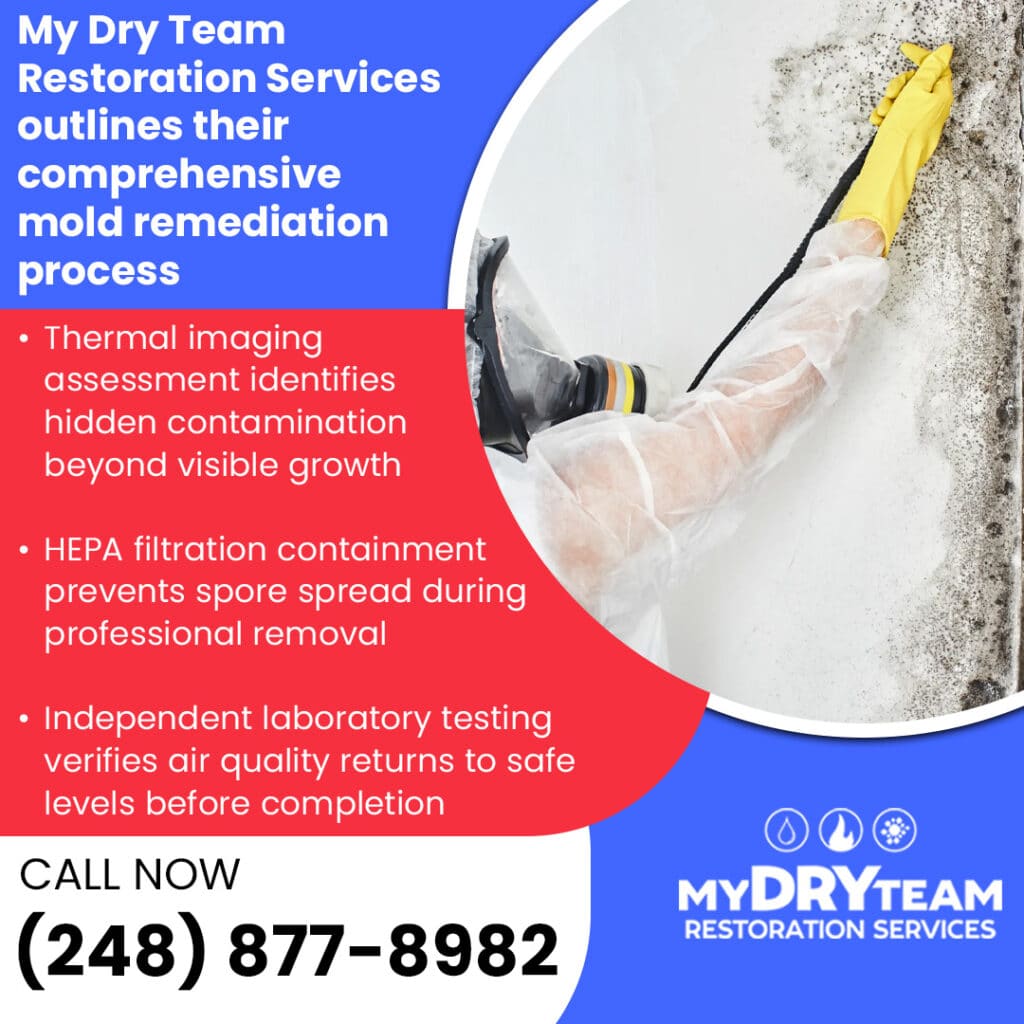
Step 1 – Professional Mold Inspection and Assessment
My Dry Team Restoration Services begins every project with a thorough property assessment. We inspect all areas showing visible growth, plus likely hidden locations. Our certified inspectors document conditions with detailed photography.
We use professional moisture meters and thermal imaging to reveal hidden moisture patterns supporting invisible mold growth.
Our comprehensive inspection includes:
- Visual examination of all accessible areas
- Moisture mapping of walls, floors, and ceilings
- Thermal imaging to detect hidden moisture
- Source identification for all water intrusion
- Detailed documentation for insurance purposes
- Written scope of work with a clear timeline
Step 2 – Containment and Air Filtration
Proper containment prevents spore spread during mold removal. We establish physical barriers using 6-mil polyethylene sheeting, sealing affected areas from the rest of the homes.
Negative air pressure systems ensure airflow moves from clean areas toward contaminated zones. We position commercial air scrubbers with HEPA filtration, continuously removing airborne spores.
Containment protocol elements:
- Floor-to-ceiling polyethylene barriers
- Sealed doorways with zipper access
- HVAC system isolation
- Negative air machines are creating proper pressure
- HEPA filtration units processing air 4-6 times hourly
Step 3 – Safe Mold Removal and Material Disposal
IICRC protocols guide our mold remediation procedures. We remove porous materials that cannot be effectively cleaned, including drywall, insulation, ceiling tiles, and carpeting with growth.
Non-porous surfaces receive thorough cleaning with EPA-approved antimicrobial solutions. We HEPA vacuum all surfaces before and after treatment.
Material handling by type:
| Material Type | Treatment Method | Disposal Required |
| Drywall with growth | Remove and dispose | Yes |
| Wood framing | Clean and treat | Case-by-case |
| Insulation | Remove and dispose | Yes |
| Concrete/tile | Clean and treat | Rarely |
| Carpet/padding | Remove and dispose | Yes |
| Metal/plastic | Clean and treat | No |
We bag all removed materials in 6-mil plastic before transport, preventing spore release during removal.
Step 4 – Moisture Source Correction
Mold clean-up proves temporary without addressing moisture sources. We identify and repair all water intrusion points, examining roofs, foundations, plumbing, and HVAC systems.
Critical moisture control measures:
- Foundation crack sealing and waterproofing
- Plumbing leak repairs and pipe insulation
- Ventilation improvements in bathrooms and kitchens
- Dehumidifier installation in basements and crawl spaces
- Gutter and downspout repairs and extensions
- Vapor barrier installation in crawl spaces
We reduce humidity levels to below 60% throughout properties using commercial dehumidifiers.
Step 5 – Post-Remediation Verification
We never consider projects complete without verification testing. Independent laboratories analyze air samples from treated areas, confirming successful spore level reduction to normal background levels.
Verification process components:
- Post-remediation air quality sampling
- Laboratory analysis by an independent facility
- Visual clearance inspection of all treated areas
- Moisture level verification throughout the property
- Comprehensive documentation package
- Written certification of successful completion
Why Commerce Township and Milford Residents Choose My Dry Team
IICRC Certification and Industry Expertise
My Dry Team Restoration Services maintains current IICRC certification for mold remediation. Our technicians complete specialized training in containment, removal, and verification protocols. We understand local building codes and regulations affecting remediation work.
Advanced Equipment and Technology
Professional mold removal requires commercial-grade equipment. We invest extensively in tools that consumer products cannot match.
Our professional equipment includes:
- Commercial HEPA air scrubbers (2,000+ CFM capacity)
- Negative air machines for proper containment
- Professional moisture meters and hygrometers
- Thermal imaging cameras detect hidden moisture
- Commercial dehumidifiers (150+ pints daily capacity)
- EPA-approved antimicrobial treatment solutions
Thermal imaging technology identifies moisture patterns within walls before mold becomes visible.
Transparent Pricing and Process
We provide detailed written estimates before beginning any mold remediation work. Every estimate breaks down labor, materials, equipment, and disposal costs. Our project managers maintain constant communication throughout remediation.
Local Presence and Rapid Response
Our Commerce Township location enables rapid response throughout Oakland County. We understand local property characteristics affecting mold growth. We’ve built our reputation through hundreds of satisfied local customers.
Preventing Mold Growth in Your Commerce Township or Milford Home
Moisture Control Strategies
Prevention begins with humidity management. We recommend maintaining indoor humidity below 60% year-round.
Effective moisture control measures:
- Run dehumidifiers, maintaining 45-55% humidity
- Monitor humidity with digital hygrometers
- Address condensation on windows immediately
- Use exhaust fans during and after showers
- Fix plumbing leaks within 24 hours
- Clean gutters twice annually
- Extend downspouts 10+ feet from foundations
Proper Ventilation and Airflow
Stagnant air promotes mold growth even with moderate humidity. Bathroom and kitchen exhaust fans should run during use and 20-30 minutes afterward.
Ventilation improvements preventing mold:
- Install bathroom exhaust fans venting to the exterior
- Use kitchen range hoods during cooking
- Ensure adequate attic ventilation
- Change HVAC filters monthly during high-use seasons
- Open windows for air circulation during mild weather
Regular Maintenance and Inspections
We recommend quarterly basement and crawl space inspections, looking for moisture signs, musty odors, and visible growth.
Preventive maintenance schedule:
- Quarterly: Basement/crawl space self-inspections
- Twice yearly: Gutter cleaning and roof inspections
- Annually: Professional moisture assessment
- After storms: Check for leaks and water intrusion
Water Damage Response Protocol
Water damage requires immediate response to prevent mold growth. We maintain 24/7 emergency availability. Professional water extraction within 24 hours prevents most mold problems.
Understanding Mold Remediation Costs in Southeast Michigan
Factors Affecting Mold Removal Pricing
Mold removal costs vary based on numerous factors. Project size represents the primary cost driver. Accessibility affects pricing substantially.
Primary cost factors we consider:
- Total square footage of affected areas
- Location accessibility (basement vs. attic vs. walls)
- Amount of material requiring removal
- Moisture source repair complexity
- Testing and verification requirements
Typical Cost Ranges for Local Projects
General cost ranges for Commerce Township and Milford projects:
| Project Scope | Square Footage | Typical Cost Range |
| Small containment | Under 100 sq ft | $1,500 – $3,500 |
| Medium remediation | 100-300 sq ft | $3,500 – $7,500 |
| Large-scale project | 300-1,000 sq ft | $7,500 – $15,000 |
| Whole-house remediation | 1,000+ sq ft | $15,000 – $30,000+ |
Additional costs include air quality testing ($300-800) and clearance verification ($400-900).
Investment Value of Professional Mold Remediation
Professional mold remediation protects property values. Homes with documented successful remediation maintain market value. Properties with recurring mold problems sell for 5-15% less than comparable clean properties.
Mold Remediation and Insurance Claims
What Homeowner Insurance Typically Covers
Insurance coverage for mold clean-up depends on the moisture source. Sudden water damage from burst pipes or storm events typically receives coverage. Gradual moisture accumulation from poor maintenance usually doesn’t qualify.
Coverage considerations:
- Sudden water damage mold is typically covered
- Gradual moisture issues are usually excluded
- Coverage limits are often capped at $5,000-$10,000
- Additional endorsements available for higher limits
How My Dry Team Supports Insurance Claims
My Dry Team Restoration Services works directly with insurance adjusters on dozens of claims monthly. We provide detailed documentation supporting claim processing.
Our insurance support services include:
- Comprehensive photo documentation
- Detailed moisture mapping reports
- Clear scope of work aligned with coverage
- Direct adjuster communication
- Experience with all major carriers
Signs You Need Immediate Mold Remediation
Mold Problem Indicators
Visual Signs:
Visible mold, regardless of size, needs professional assessment as small patches often hide larger growth.
- Any visible mold (black, green, white, or orange)
- Peeling paint or bubbling surfaces
- Water stains on ceilings or walls
- Warping baseboards or trim
- Efflorescence (basement walls)
Environmental Signs:
Musty odors signal mold, even if not visible. We investigate odors with moisture meters and thermal imaging.
- Persistent musty/earthy odors
- Humidity over 60%
- Condensation on windows/pipes
- Standing water/excessive dampness
Post-Water Damage:
Professional mold assessment is needed within 48-72 hours of water damage. Moisture mapping prevents later hidden mold discoveries.
Frequently Asked Questions About Mold Removal
How long does professional mold remediation take?
Most mold remediation projects are completed within 3-7 days, depending on the scope. Small containment areas may finish in 2-3 days. Extensive projects can require 7-14 days.
Can mold return after professional removal?
Mold can return if moisture sources aren’t corrected. Our remediation addresses both mold and underlying moisture issues. With proper moisture control, recurrence becomes extremely unlikely.
What’s the difference between mold remediation and mold removal?
Mold removal refers to physically removing growth from surfaces. Mold remediation encompasses a complete process including containment, removal, source correction, and verification.
Do I need to leave my home during mold clean-up?
We don’t always require evacuation. Proper containment protects unaffected areas. We assess each situation individually.
How do I know if mold remediation was successful?
Post-remediation air quality testing verifies success. Independent laboratories compare treated area samples to outdoor control samples. We provide written clearance documentation.
Will homeowner’s insurance cover mold removal costs?
Coverage depends on the moisture source and the specific policy terms. Sudden water damage mold typically receives coverage. We help navigate the claims process and work directly with adjusters.
What causes mold to grow in Commerce Township homes?
High humidity, water intrusion, and inadequate ventilation cause most local mold problems. Clay soil creates persistent basement moisture. Our humid climate provides ideal growth conditions 6-8 months annually.
How much does mold remediation cost in Milford?
Costs range from $1,500 for small projects to $30,000+ for extensive contamination. Most Milford projects fall between $3,500-$7,500. We provide detailed estimates before beginning work.
Protect Your Home from Mold Damage
Understanding mold behavior empowers Commerce Township and Milford homeowners to take protective action. Prevention through moisture control proves far less expensive than remediation.
When mold does appear, a professional response minimizes damage significantly. My Dry Team Restoration Services transforms mold disasters into manageable remediation projects with predictable outcomes. Our comprehensive approach addresses both visible growth and underlying moisture issues.
Contact us for professional mold assessment and remediation at (248) 877-8982 or email office@mydryteam.com. Don’t let mold compromise your property. Our experienced local team stands ready to provide comprehensive remediation services. Call now for rapid response and expert mold solutions you can trust.
About My Dry Team Restoration Services
Located in Commerce Township, My Dry Team Restoration Services specializes in professional mold remediation, mold removal, and mold clean up throughout Oakland County, Michigan. Our IICRC-certified technicians provide comprehensive solutions from initial inspection through post-remediation verification. We maintain advanced equipment, including commercial HEPA filtration systems, thermal imaging technology, and professional moisture detection tools.
With years of experience serving Commerce Township, Milford, and surrounding communities, we understand Southeast Michigan’s unique moisture challenges. Our commitment to transparent pricing, clear communication, and proven remediation protocols has established us as the trusted choice for local homeowners and property managers.